
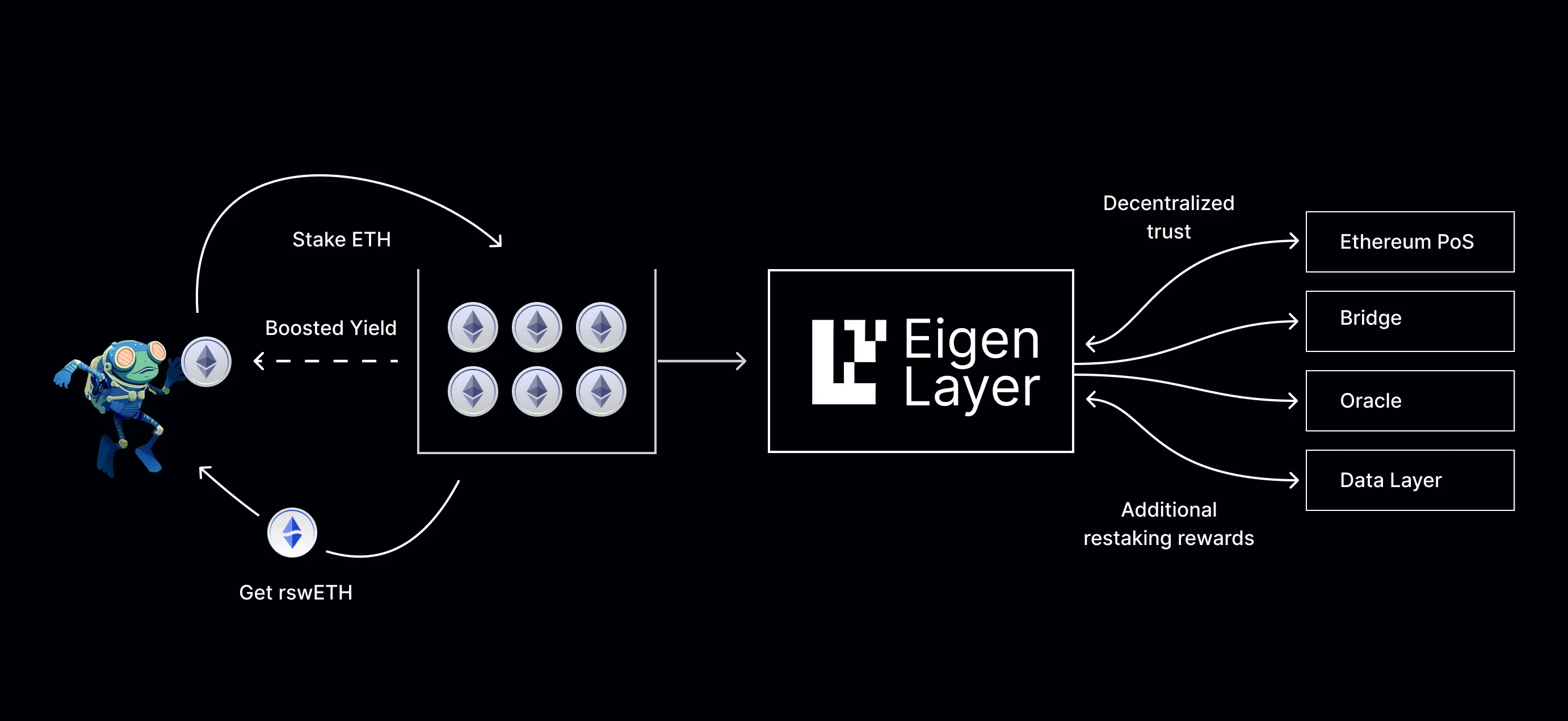
Restaking 2026: The Infrastructure Shift
Restaking has transitioned from a speculative narrative into foundational blockchain infrastructure. In 2026, the focus has shifted away from isolated yield farming toward interconnected security markets. EigenLayer V2, alongside protocols like Symbiotic and Karak, now define the landscape, treating staked assets as reusable collateral rather than static deposits.
The primary value proposition is the unlocking of trapped capital. Staked Ethereum, which previously sat idle to secure the base layer, now generates multi-layer yield through Active Validation Services (AVS). This utility transforms simple staking into a complex engine where security is sold as a service to various decentralized applications. The market has responded with stability; EigenLayer’s total value locked (TVL) has held steadily above $15 billion, signaling institutional confidence in the model’s durability.
This infrastructure shift is underpinned by the underlying asset’s performance. As Ethereum continues to serve as the settlement layer for this activity, its price action remains the primary driver of yield sustainability.
The ecosystem now prioritizes robustness over hype. Protocols are focusing on risk management and slashing mitigation, ensuring that the reuse of security does not compromise the base layer’s integrity. This maturation marks the end of the wild west phase, replacing it with a structured, infrastructure-first approach to decentralized security.
EigenLayer V2: Redefining Security and Interoperability
The release of EigenLayer V2 marks a structural pivot from the initial "trust-minimized" promise toward a more robust, multi-layered security framework. While the original protocol introduced the concept of restaking, V2 addresses the centralization risks that emerged as large operators consolidated stake. The update shifts the focus from simple yield aggregation to a modular security model where Actively Validated Services (AVS) can share cryptographic proofs without compromising the underlying Ethereum consensus layer.
New Slashing and Operator Onboarding
A primary concern in the early restaking landscape was the "tragedy of the commons," where a single AVS failure could trigger cascading slashing events across the entire restaked ecosystem. V2 introduces granular slashing conditions, allowing AVS providers to define specific fault proofs that isolate risk. This means an operator can participate in a low-risk data availability layer without exposing their full restaked ETH to the volatility of a high-risk oracle service.
Operator onboarding has also been refined to mitigate sybil attacks and ensure economic skin in the game. The new protocol enforces stricter bonding requirements and introduces a decentralized reputation system that tracks operator performance across multiple AVSs. This transparency forces operators to maintain high uptime and security standards, as poor performance now directly impacts their ability to attract restaked capital from Liquid Restaking Tokens (LRTs).
AVS Interoperability and Shared Security
Interoperability remains the core value proposition of restaking, but V2 makes it practical. Previous iterations required complex, custom bridges between AVSs, creating fragmentation. V2 standardizes the interface for cross-AVS communication, allowing services like decentralized oracle networks, sequencers, and privacy layers to tap into the same pool of security. This shared security model reduces the barrier to entry for new AVSs, which no longer need to bootstrap their own validator sets.
The integration with Symbiotic and Karak further enhances this ecosystem. Symbiotic’s unbonding features allow for more flexible capital allocation, while Karak provides a modular middleware layer that simplifies the deployment of new AVSs. This triad—EigenLayer, Symbiotic, and Karak—forms the backbone of the 2026 restaking landscape, offering a balance of security, flexibility, and innovation.
The technical shift in V2 is not just about code; it is about economic alignment. By making security a shared, modular resource, EigenLayer is moving closer to its original vision: a single, unified security layer for Ethereum’s entire application stack. This reduces the redundant security costs that have historically plagued blockchain infrastructure, allowing capital to flow more efficiently to the services that need it most.
Native Restaking Protocols: Symbiotic and Karak
While EigenLayer established the foundational framework for restaking, two distinct protocols have emerged to address its architectural limitations: Symbiotic and Karak. These native alternatives prioritize flexibility and composability, offering permissionless or asset-agnostic approaches to shared security that diverge from EigenLayer’s more rigid, EOA-centric model.
Symbiotic reimagines security as a modular, composable layer. Instead of relying on a single, centralized set of contracts, Symbiotic allows validators to create custom security modules for specific applications. This approach enables "security stacking," where validators can allocate their staked ETH to multiple distinct security pools simultaneously, tailoring their risk exposure. It effectively turns security into a liquid, tradable asset that can be optimized for specific yield opportunities or risk profiles, rather than a one-size-fits-all utility.
Karak takes a different path by focusing on permissionless, asset-agnostic security. It decouples the security layer from the underlying asset, allowing any tokenized asset to contribute to a shared security pool. This is particularly significant for 2026, as it opens the door for non-ETH assets to participate in restaking economies, broadening the scope of shared security beyond Ethereum’s native staking ecosystem. Karak’s architecture is designed to be interoperable, allowing different chains and protocols to tap into its security pool without needing to build their own validator sets from scratch.
The following comparison highlights the structural differences between these native protocols and EigenLayer, focusing on their core security models and target applications.
| Protocol | Security Model | Supported Assets | Target AVS Types |
|---|---|---|---|
| EigenLayer | EOA-centric, centralized contracts | ETH, stETH, rETH | General-purpose, broad AVS |
| Symbiotic | Modular, composable security modules | ETH, liquid staking tokens | Custom, application-specific |
| Karak | Permissionless, asset-agnostic | Multi-asset, tokenized assets | Cross-chain, interoperable |
Both Symbiotic and Karak represent a maturation of the restaking narrative, moving beyond the initial proof-of-concept phase of EigenLayer. Symbiotic offers granular control for validators seeking to optimize risk, while Karak expands the universe of restakable assets. As the ecosystem evolves, these protocols are likely to capture significant market share by addressing the specific needs that EigenLayer’s original design could not fully accommodate.
Liquid restaking tokens capture yield
Liquid Restaking Tokens (LRTs) function as the primary vehicle for capturing restaking yield, allowing stakers to maintain liquidity while securing additional protocols. By wrapping staked assets like ETH or LSTs, LRT protocols such as EigenLayer, Symbiotic, and Karak enable users to earn yield from both the base staking reward and the additional restaking services provided to other networks.
The market has consolidated around a few major LRTs, each with distinct risk profiles and yield structures. ezETH, issued by Ether.fi, is one of the largest LRTs by total value locked, offering a diversified basket of restaked assets. rsETH, from Renzo, focuses on optimizing yield through active management of restaking positions. pufETH, issued by Puffer, emphasizes capital efficiency by allowing users to restake without locking up their assets for extended periods. These tokens provide a convenient way for users to participate in restaking without managing the underlying infrastructure.
Liquidity remains the key benefit of LRTs. Unlike traditional staking, where assets are locked for long periods, LRTs can be traded, used in DeFi protocols, or held in wallets. This liquidity allows users to respond quickly to market changes, rebalance their portfolios, or access capital when needed. However, this convenience comes with trade-offs. LRTs introduce smart contract risk, as users must trust the LRT protocol to manage the underlying assets correctly. Additionally, the yield from LRTs can be volatile, depending on the performance of the restaking protocols they support.
| Token | Protocol | Primary Focus |
|---|---|---|
| ezETH | Ether.fi | Diversified restaking basket |
| rsETH | Renzo | Active yield optimization |
| pufETH | Puffer | Capital efficiency |
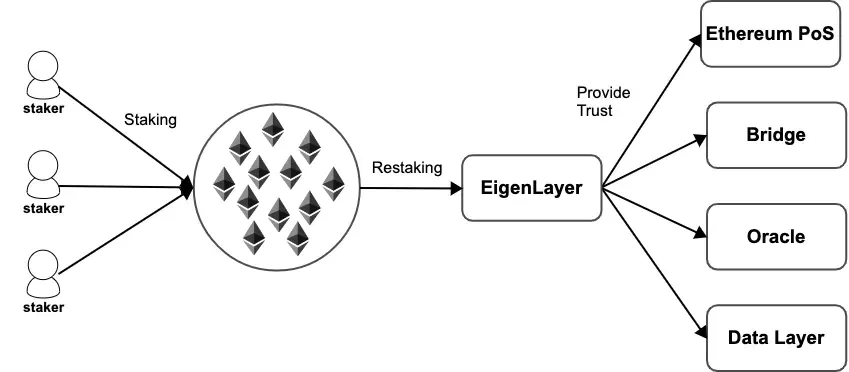
The Reality of Slashing and Systemic Risk
Restaking amplifies yield potential, but it also concentrates risk. When you delegate your staked assets to an Actively Validated Service (AVS), you are not just securing a single network; you are exposing your collateral to the security assumptions and operational competence of multiple protocols simultaneously. This correlation creates a systemic vulnerability where a failure in one AVS can cascade across the entire restaking ecosystem.
Slashing remains the most immediate threat. If an AVS operator acts maliciously or fails to meet performance requirements, the underlying validator’s stake is penalized. In a restaking context, this penalty applies to the shared security deposit. A single poorly configured AVS or a compromised operator can trigger slashing events that drain yields and erode principal across multiple delegated positions. The complexity of managing multiple AVS relationships means that a user’s exposure is no longer linear; it is multiplicative.
The introduction of EigenLayer V2 and competing protocols like Symbiotic aims to mitigate these risks through better risk management frameworks and modular security. However, the technology is still maturing. The 2026 landscape requires a cautious approach, recognizing that higher yields often come with higher opacity regarding how slashing conditions are enforced across diverse AVS contracts.
Key Considerations for 2026 Restakers
Restaking has matured from a yield experiment into a core infrastructure layer for Ethereum and Solana. As EigenLayer V2 and native protocols scale, the focus shifts from simple APY chasing to sustainable security and risk management.
The landscape is evolving rapidly. Official documentation from EigenLayer and Symbiotic provides the most reliable updates on protocol changes and security audits.
No comments yet. Be the first to share your thoughts!