
Restaking strategies 2026 overview
Restaking in 2026 has evolved from speculative yield-chasing into a structured layer of shared security. By allowing a single stake to secure multiple services simultaneously, protocols like EigenLayer, Symbiotic, and EtherFi significantly increase capital efficiency. This model lets validators contribute their staked assets to Actively Validated Services (AVSs), creating a modular security layer that supports diverse decentralized applications without requiring separate, isolated validator sets.
The shift toward institutional-grade risk management is now the dominant narrative. Professional custody solutions and risk-managed strategies are prioritized by institutional investors who view restaking as a way to diversify exposure while maintaining strict control over systemic contagion risks. The same stake that secures Ethereum also secures other networks, which means that a failure in one AVS can have cascading effects across the entire ecosystem. This interconnectedness requires a cautious, analytical approach to protocol selection and risk allocation.
While the potential for enhanced yields remains, the focus has moved toward sustainable, long-term infrastructure support. Validators must carefully evaluate the security assumptions of each AVS they support, understanding that the benefits of shared security come with the responsibility of managing layered risks. The landscape is no longer about finding the highest yield, but about building a resilient, diversified restaking portfolio that can withstand the complexities of a multi-layered blockchain ecosystem.


As an Amazon Associate, we may earn from qualifying purchases.
Top restaking protocols to watch
The restaking landscape in 2026 has consolidated around a few key protocols that define how capital is secured and utilized. Rather than spreading resources across unproven ventures, participants are increasingly focusing on established infrastructure that offers clear security models and active developer ecosystems. Understanding the distinct value propositions of these platforms is essential for managing risk while seeking yield.
EigenLayer: The Security Layer
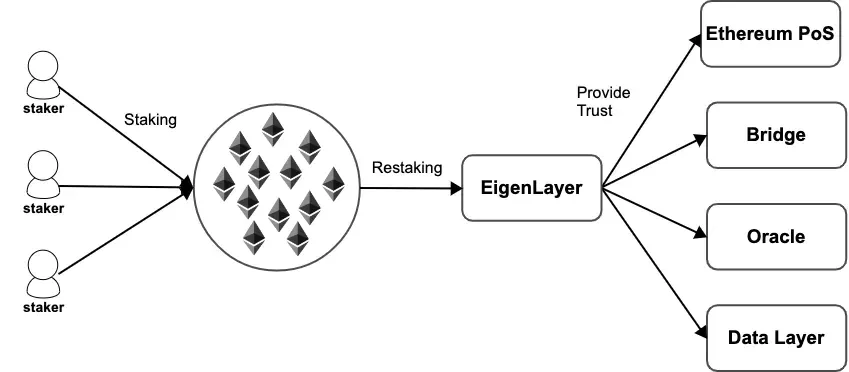
EigenLayer remains the foundational layer for restaking on Ethereum. It allows validators to "restake" their ETH, providing security services to various Actively Validated Services (AVSs) such as oracles, bridges, and MEV-boosters. This model effectively monetizes idle staked assets by extending Ethereum's security footprint. While it introduces slashing risks, its deep liquidity and widespread adoption make it the default choice for many institutional and retail participants.
Symbiotic: Modular Security
Symbiotic takes a different approach by offering a modular security framework. Instead of a single monolithic contract, Symbiotic allows protocols to create custom security pools tailored to their specific needs. This flexibility enables more granular risk management, as users can choose which AVSs to support based on their own risk tolerance. It is particularly attractive for protocols seeking to avoid the "one-size-fits-all" constraints of other restaking layers.
EtherFi: Liquid Restaking Token Integration
EtherFi bridges the gap between restaking and liquidity. By offering Liquid Restaking Tokens (LRTs), it allows users to restake their ETH while maintaining liquidity. This means users can still participate in other DeFi activities, such as lending or providing liquidity, with their staked assets. This dual-utility model makes EtherFi a popular choice for those who want to maximize yield without locking up their capital indefinitely.
Protocol Comparison
The following table summarizes the core differences between these leading protocols to help you decide which aligns with your strategy.
| Protocol | Security Model | Liquidity Type | Primary Use Case |
|---|---|---|---|
| EigenLayer | Centralized Security Layer | Restaked ETH | AVS Security |
| Symbiotic | Modular Security | Custom Pools | Flexible AVS Support |
| EtherFi | Liquid Restaking | LRTs (eETH) | DeFi Composability |
Related Tools and Hardware
For those looking to secure their restaking operations, using hardware wallets is a critical step. Below are recommended devices for managing your crypto assets safely.


As an Amazon Associate, we may earn from qualifying purchases.
Liquid restaking tokens explained
Liquid restaking tokens (LRTs) serve as the operational bridge between staked assets and broader liquidity needs. Instead of locking capital into a single yield source, LRTs allow users to restake their ETH or other assets across multiple protocols while retaining a liquid representation of that position. This mechanism is central to modern restaking strategies, enabling participants to capture composite yields from various networks without sacrificing capital efficiency.
Protocols like EigenLayer, Symbiotic, and EtherFi have pioneered this space by issuing tokens that represent restaked value. For instance, EigenLayer’s eETH and EtherFi’s ezETH allow holders to trade, lend, or use these tokens in DeFi applications while the underlying asset secures additional services like oracles or AVSs. Symbiotic takes a different approach by focusing on customizable risk pools, allowing users to select specific risk parameters for their restaked assets. This flexibility makes LRTs a critical component for investors seeking to maximize returns while managing exposure across different layers of the Ethereum ecosystem.
The primary advantage of LRTs is their ability to unlock liquidity that would otherwise be tied up in long-term staking contracts. By providing a tradable token, these platforms enable users to react quickly to market changes or rebalance their portfolios without unbonding periods. However, this convenience introduces new risks, including smart contract vulnerabilities and slashing conditions that apply across all restaked services. Investors must carefully evaluate the specific protocols backing their LRTs to understand the full scope of their risk exposure.


As an Amazon Associate, we may earn from qualifying purchases.
Understanding the mechanics of LRTs is essential for anyone looking to participate in restaking. These tokens are not just passive yield generators; they are active instruments that interact with multiple layers of the crypto economy. As the restaking landscape evolves in 2026, the role of LRTs will likely expand, offering more sophisticated ways to manage risk and reward. Staying informed about the specific features and risks of each protocol is crucial for making informed investment decisions.
Systemic risks and security audits
Restaking amplifies both yield and risk. By allowing the same stake to secure multiple services, protocols like EigenLayer, Symbiotic, and EtherFi increase capital efficiency while simultaneously layering risk. A single smart contract failure or validator misbehavior can impact multiple secured services simultaneously, creating a cascade of potential losses rather than an isolated incident.
Slashing remains the most immediate threat. When a validator acts maliciously or goes offline, the protocol penalizes the stake. In a restaking environment, this penalty applies to the entire restaked position, not just the base Ethereum stake. This means a single error can drain the value across all the AVSs (Actively Validated Services) the operator supports. Understanding the specific slashing conditions of each protocol is essential before committing capital.
Security audits are not optional; they are the foundation of trust. However, an audit is a snapshot in time, not a guarantee of future safety. Smart contract vulnerabilities can emerge after an audit is completed, especially when new features are added. Investors should prioritize protocols with a history of transparent bug bounty programs and rapid response to discovered vulnerabilities. The audit trail should be publicly accessible and regularly updated.
Insurance mechanisms provide a safety net, but they are not a substitute for due diligence. Some protocols offer insurance pools or partnerships with insurance providers to cover specific types of losses. These mechanisms can mitigate the impact of a catastrophic failure, but they often come with exclusions and caps. It is crucial to read the fine print to understand what is and isn't covered.


As an Amazon Associate, we may earn from qualifying purchases.
How to choose a restaking strategy
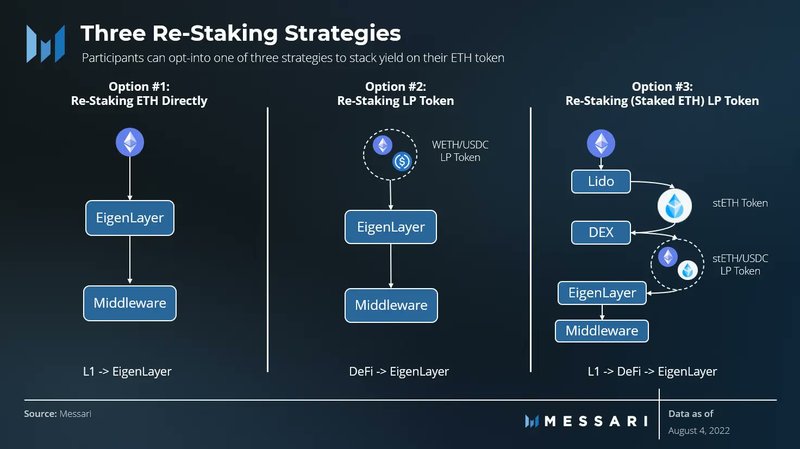
Selecting the right restaking protocol requires aligning your risk tolerance with your liquidity needs. EigenLayer serves as the primary settlement layer, allowing you to delegate ETH to Active Verifying Services (AVSs) while maintaining exposure to Ethereum’s base yield. Symbiotic introduces composable staking, enabling you to customize risk parameters across multiple validators. EtherFi offers liquid restaking tokens (LRTs), which provide immediate liquidity but introduce smart contract complexity.
Evaluate each protocol based on three factors: slashing risk, lock-up periods, and AVS diversity. Institutional investors often prefer protocols with professional custody solutions to mitigate operational risk. DeFi protocols may prioritize flexibility, accepting higher smart contract risk for yield optimization. Always verify that the protocol has undergone rigorous auditing before committing capital.
Determine how much capital you can afford to lose if a validator is slashed. Conservative investors should stick to well-audited, established protocols like EigenLayer with minimal AVS exposure. Aggressive investors may explore newer protocols like Symbiotic for higher yields, accepting higher smart contract risk.
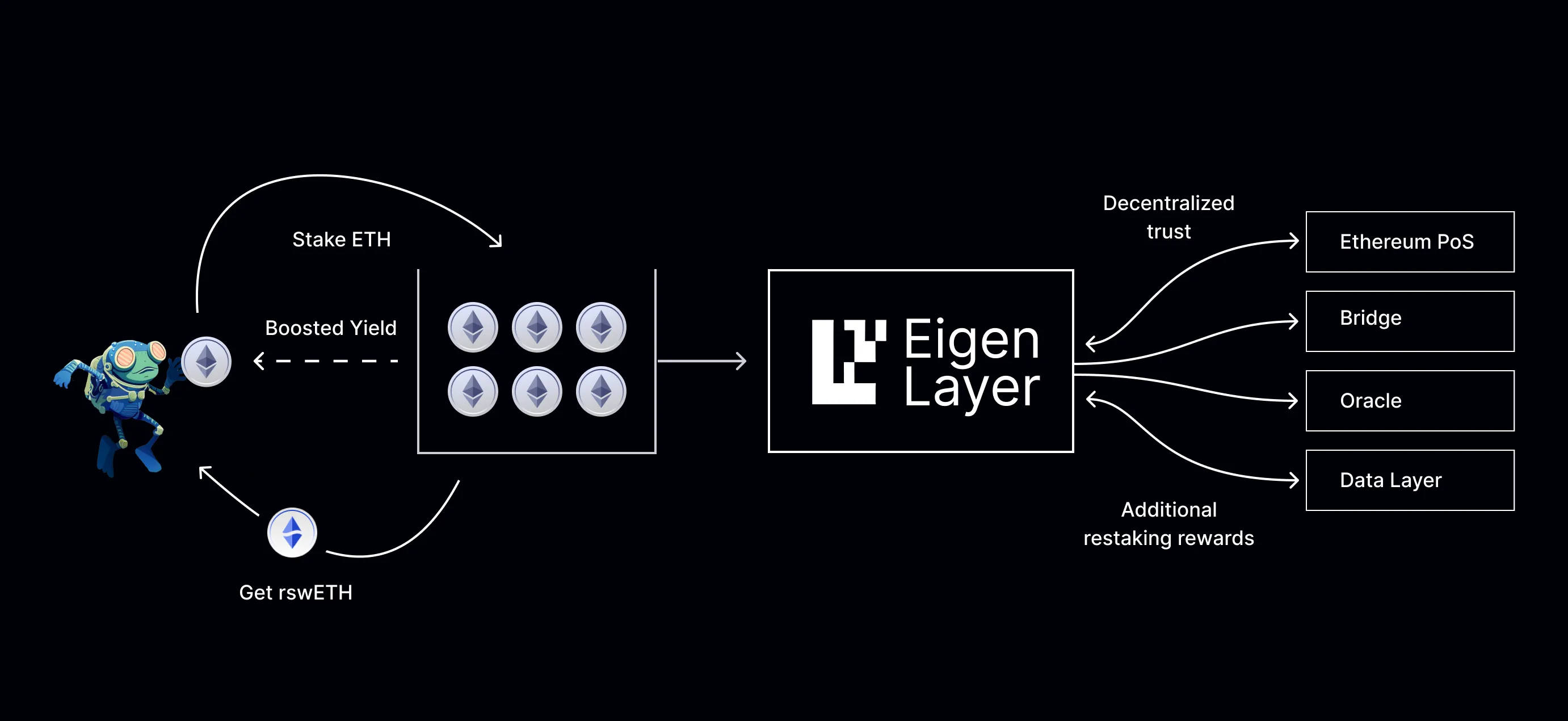
Decide if you need immediate access to your staked assets. Liquid restaking tokens from EtherFi allow you to trade or use your staked ETH in other DeFi protocols, providing flexibility. Non-liquid restaking locks your assets, potentially offering higher yields but reducing your ability to react to market changes.
Review the Active Verifying Services you are supporting. Diversifying across multiple AVSs can spread risk, but each new AVS introduces additional smart contract and operational risk. Ensure you understand the specific risks associated with each AVS before delegating your stake.


As an Amazon Associate, we may earn from qualifying purchases.
Restaking vs traditional staking
Traditional staking on Ethereum is straightforward: you lock ETH to secure the network and receive a single yield stream. Restaking, pioneered by protocols like EigenLayer, adds a second layer. You take your staked ETH or liquid staking tokens (LSTs) and re-delegate them to secure additional services, known as Actively Validated Services (AVSs). This creates a compounding yield opportunity but introduces layered complexity.
The primary difference lies in capital efficiency versus risk exposure. Standard staking isolates your capital to the Ethereum consensus layer. Restaking concentrates that same capital across multiple protocols. If an AVS fails or suffers a slashing event, your underlying ETH stake can be penalized. You are effectively betting on the security of the entire restaking ecosystem, not just Ethereum.
| Feature | Traditional Staking | Restaking |
|---|---|---|
| Yield Source | Ethereum consensus rewards | Consensus + AVS service fees |
| Risk Profile | Single-layer slashing risk | Layered slashing risk across AVSs |
| Capital Efficiency | Low (1:1 stake) | High (1:1 stake secures multiple services) |
| Complexity | Low (one-click via Lido/EtherFi) | High (requires managing AVS exposure) |
Protocols like Symbiotic offer a more modular approach to this restaking infrastructure, allowing for customizable security modules. While the potential returns are higher, the technical barrier to entry is significant. Most users interact with restaking through liquid restaking tokens (LRTs) issued by platforms like EtherFi, which automate the delegation process but still carry the inherent risks of the underlying AVSs.


As an Amazon Associate, we may earn from qualifying purchases.
Frequently asked: what to check next
How does restaking actually work?
Restaking lets you reuse staked assets, like ETH on EigenLayer, to secure additional networks such as Symbiotic or AVSs. This creates multiple yield streams from a single deposit. However, it also concentrates risk; if the underlying consensus fails, your staked assets may be slashed.
What are the main risks of restaking?
The primary danger is slashing, where protocol violations result in the loss of staked capital. Restaking also introduces smart contract risk and liquidity risk if you need to exit positions during market stress. Protocols like EtherFi offer liquid restaking tokens to manage some liquidity constraints, but the underlying exposure remains.
Is restaking safe for beginners?
Restaking is generally not recommended for beginners due to its complexity and high-stakes nature. The interdependence of protocols means a failure in one layer can cascade. Beginners should start with simple staking on established networks before exploring advanced restaking strategies.
What is the difference between restaking and liquid staking?
Liquid staking (LST) converts staked assets into a tradable token (like stETH) to provide liquidity. Restaking takes that staked asset and re-uses it to secure other services. While LSTs are often the input for restaking protocols, restaking adds an extra layer of security service and associated risk.
Can I unstake my restaked assets?
Unstaking is often a slow process. On networks like Ethereum, withdrawing staked ETH can take days or weeks. Restaking protocols may impose additional lock-up periods or exit queues. Always check the specific withdrawal terms of the protocol, such as EigenLayer or Symbiotic, before depositing.


As an Amazon Associate, we may earn from qualifying purchases.
No comments yet. Be the first to share your thoughts!