
Restaking 2026: The Infrastructure Shift
Restaking has moved past the speculative hype of 2025 into established infrastructure. What began as an experimental yield layer is now the backbone for decentralized security. Stakers no longer just secure Ethereum; they actively support a growing ecosystem of Actively Validated Services (AVSs) that rely on shared security models.
The shift is measurable. EigenLayer’s total value locked (TVL) has stabilized above $15 billion, signaling that institutional and retail capital views restaking as a permanent fixture rather than a temporary trend. This capital efficiency allows a single unit of staked ETH to secure multiple protocols simultaneously, creating a multiplicative effect on network security without requiring proportional increases in validator hardware.
At the center of this evolution is EigenLayer V2. By refining the slashing conditions and improving the economic finality guarantees, V2 addresses the primary friction points that held back earlier iterations. It transforms restaking from a high-risk yield play into a robust, modular security layer that L2s and new decentralized networks can plug into with confidence.
EigenLayer V2 and modular security models
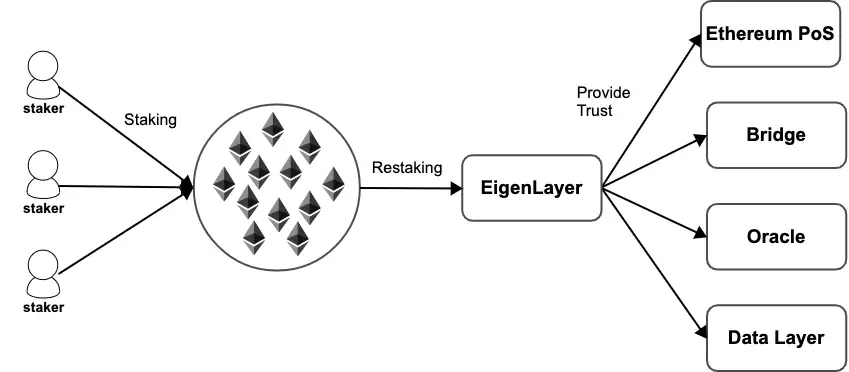
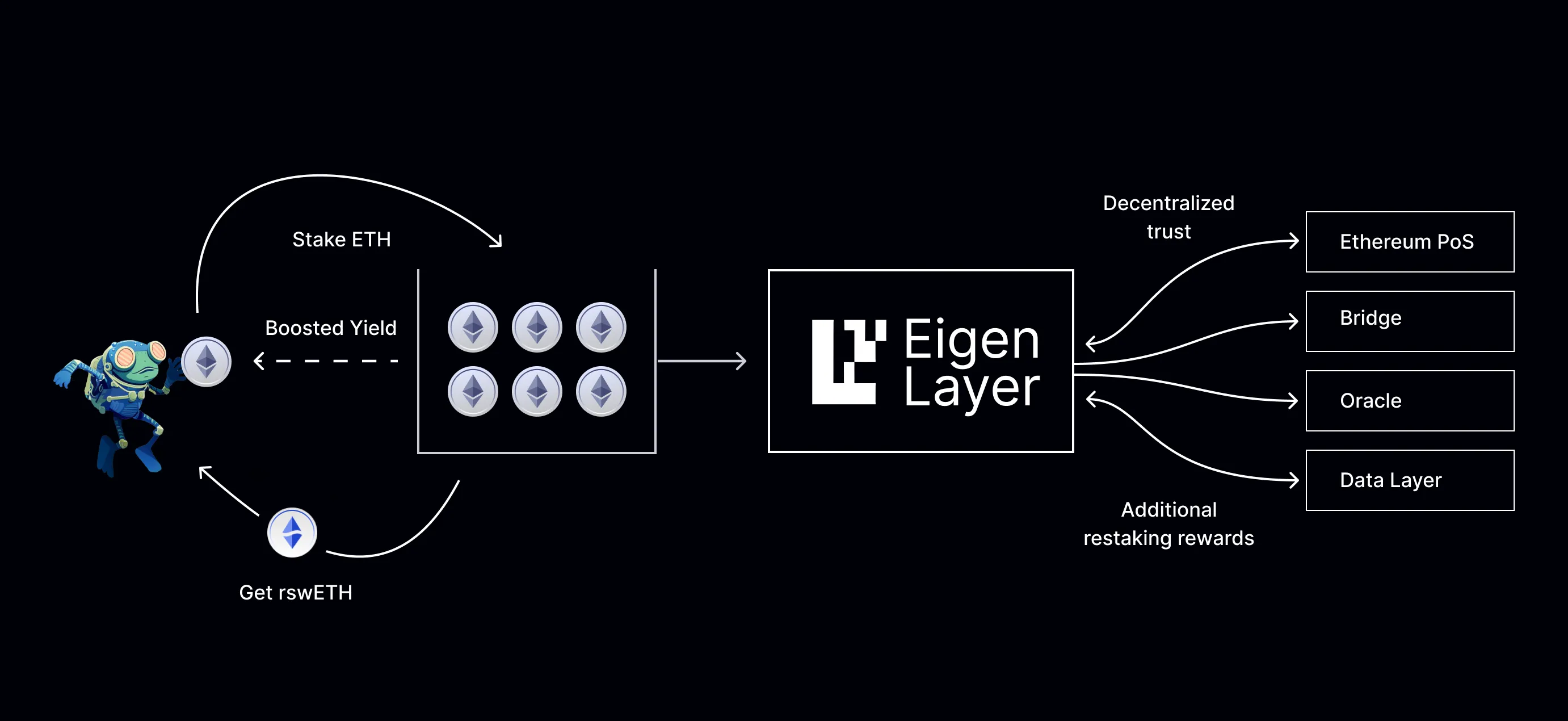
EigenLayer V2 introduces a shift from basic staking to modular security, allowing ETH to secure multiple Actively Validated Services (AVSs) simultaneously. Instead of dedicating stake to a single chain, validators can delegate their security to various protocols, creating a shared security layer that enhances ecosystem-wide resilience.
This modular approach transforms staked ETH into a multi-purpose resource. A single validator can now provide cryptographic proofs to an Oracle network, a data availability layer, and an L2 bridge all at once. This multiplexing of security reduces the cost of launching new decentralized services while increasing the economic cost of attacking the underlying Ethereum network.
The impact on L2 interoperability is significant. As L2s increasingly rely on shared security rather than building independent validator sets, cross-chain communication becomes more secure and standardized. This reduces fragmentation and makes it easier for assets and data to move between chains without compromising on trust.
Comparing Restaking Yield Strategies
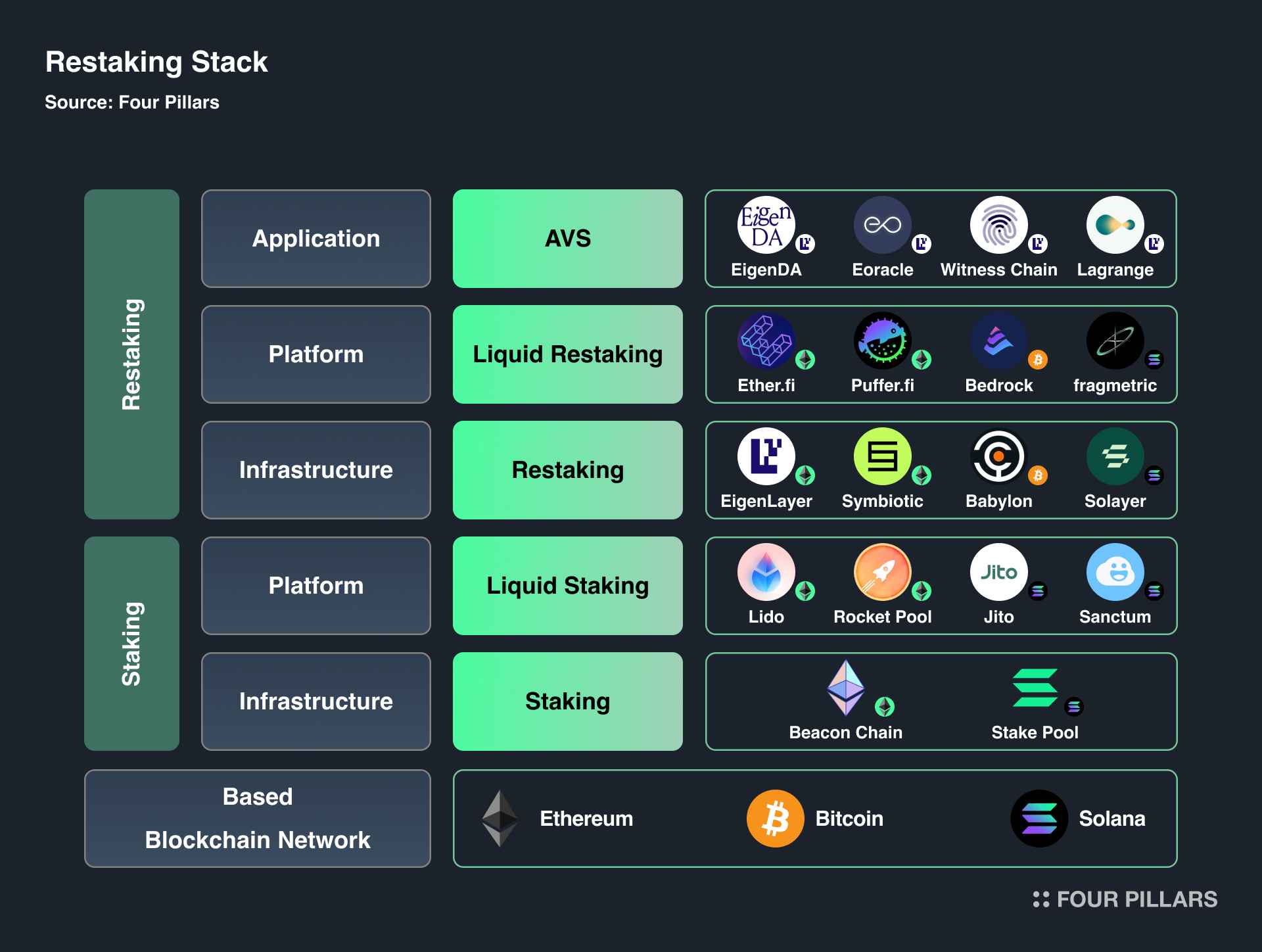
Restaking in 2026 has evolved from a niche EigenLayer experiment into a multi-chain yield landscape. The core trade-off remains consistent: higher yields come from taking on more complex risks, such as slashing exposure or smart contract vulnerabilities. To navigate this, we compare the three dominant strategies: native Ethereum restaking, Solana-based liquid restaking, and L2-focused modular security.
Ethereum Native Restaking (EigenLayer)
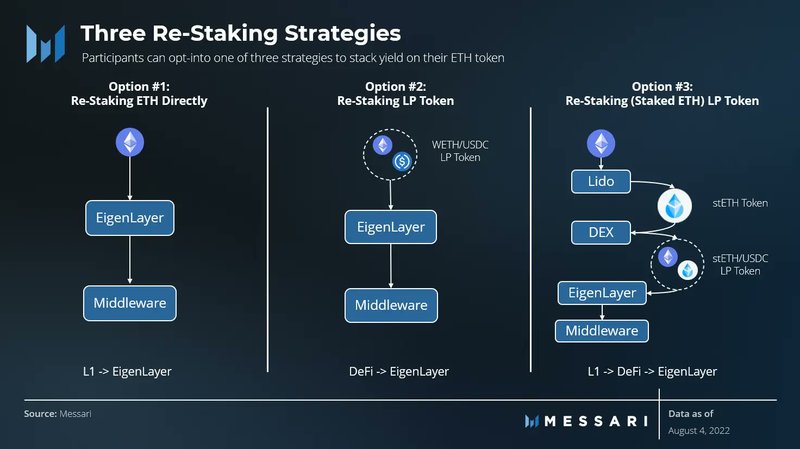
EigenLayer remains the anchor of the restaking ecosystem. By restaking ETH directly, users secure Actively Validated Services (AVSs) like oracle networks or bridging protocols. The yield here is a combination of base ETH staking rewards plus variable AVS incentives.
The risk profile is moderate to high. While the underlying asset is ETH, the smart contracts securing the AVSs introduce new attack surfaces. Slashing conditions are also more complex than standard PoS, requiring careful operator selection.
Solana Liquid Restaking (Jito)
Jito offers a different approach by combining staking with MEV (Maximal Extractable Value) redistribution. On Solana, liquid restaking tokens (LRTs) like jitoETH allow users to earn staking rewards plus a share of MEV profits.
This strategy is generally lower risk regarding slashing, as Solana’s consensus mechanism differs from Ethereum’s. However, it introduces dependency on the Jito network’s health and the volatility of MEV rewards, which can fluctuate significantly with network activity.
L2 Modular Security (EtherFi)
EtherFi and similar L2-focused protocols enable restaking on Layer 2 networks. This allows users to secure L2 sequencers or data availability layers. The yield comes from L2-specific incentives and potential bridge security fees.
The risk is higher due to the immaturity of L2 security models. If an L2 bridge or sequencer is compromised, restaked assets could be at risk. This strategy is best suited for users who believe in the long-term success of specific L2 ecosystems.
Side-by-Side Comparison
The table below summarizes the key differences between these major restaking protocols. TVL and yield figures are dynamic and reflect 2026 market conditions.
| Protocol | Est. TVL | Yield Source | Risk Profile |
|---|---|---|---|
| EigenLayer | $15B+ | ETH Staking + AVS Incentives | Moderate-High |
| Jito | $3B+ | Staking + MEV Rewards | Moderate |
| EtherFi | $2B+ | L2 Incentives + ETH Staking | High |
Choosing the Right Strategy
Your choice depends on your risk tolerance and belief in specific ecosystems. If you want the most established security model, EigenLayer is the default. For exposure to Solana’s high-throughput ecosystem, Jito offers a streamlined experience. If you are bullish on specific L2s, EtherFi allows you to bet on their security infrastructure.
Always diversify. Never allocate more than you can afford to lose to any single AVS or L2, as these are still emerging technologies with evolving risk profiles.
Risks in the restaking layer
Restaking amplifies yield potential, but it also amplifies exposure to systemic failures. By reusing the same staked capital to secure multiple protocols, you create a chain of dependency where a failure in one layer can cascade into the next. The primary risks fall into three categories: smart contract vulnerability, slashing penalties, and liquidity constraints.
Smart contract and code risk
Every Actively Validated Service (AVS) you support introduces new smart contract code to your attack surface. If an AVS has a bug, exploit, or governance failure, the restaking protocol itself may not be at fault, but your assets are still on the line. Galaxy Research notes that this "compounded risk" means a single point of failure in a niche AVS can drain the security deposit of all restakers supporting it. Unlike traditional staking, where you only trust the Ethereum protocol, restaking requires due diligence on every additional layer you connect to.
Slashing and penalty exposure
Slashing remains the most direct financial threat. If the validator node you operate misbehaves—by going offline, double-signing, or failing to validate an AVS correctly—the protocol can confiscate a portion of your staked ETH. In a restaking environment, the stakes are higher because the same stake is often pledged to multiple services. A single slashing event can trigger penalties across all connected AVSs simultaneously, potentially wiping out a significant portion of your principal. The risk is not just about losing rewards; it is about losing the underlying capital.
Liquidity and exit bottlenecks
Liquidity risk in restaking is structural. When you restake ETH, your assets are locked to provide security for the duration of the staking period. Exiting the protocol is not instantaneous. As noted in official Ethereum documentation, exit rates are rate-limited to protect network stability, capping withdrawals at roughly 256 ETH per epoch. This bottleneck means that during periods of high demand or market stress, you may be unable to exit your position quickly. This illiquidity can be costly if you need to rebalance your portfolio or respond to a sudden drop in asset prices.
Choosing a restaking strategy
Selecting the right restaking strategy depends on your tolerance for smart contract risk and your yield targets. Restaking allows you to reuse staked ETH to secure Actively Validated Services (AVSs), but it introduces new slashing conditions and operational complexity. There is no single best approach; the optimal path balances your desire for yield against your comfort with potential penalties.
Before depositing, assess how much capital you can afford to lose or have slashed. Conservative investors should stick to established protocols with long track records and minimal new code. Aggressive investors may explore newer AVSs for higher yields, understanding that smart contract risks are higher and slashing events are more frequent in experimental environments.
Yield in restaking comes from two primary sources: base staking rewards and additional AVS incentives. Calculate the total expected return by combining the Ethereum staking APR with the specific rewards offered by the AVS. Be wary of artificially high yields that may not be sustainable or may indicate higher underlying risk.
Slashing is the penalty for malicious or faulty behavior. Review the specific slashing conditions for each AVS you intend to support. Some services have stricter requirements than others. Ensure you understand the technical requirements to avoid accidental slashing, which can result in the loss of a significant portion of your staked ETH.
Audit the smart contracts of both the restaking layer and the AVS. Look for multiple independent audits and bug bounty programs. Galaxy Research and official Ethereum documentation provide detailed breakdowns of the risks and rewards associated with different protocols. Prioritize protocols with transparent governance and clear emergency pause mechanisms.
| Strategy | Risk Level | Yield Potential |
|---|---|---|
| Conservative | Low | Moderate |
| Balanced | Medium | High |
| Aggressive | High | Very High |
Common restaking: what to check next
Restaking is a mechanism that lets you reuse staked assets, like ETH, to secure additional decentralized protocols known as Actively Validated Services (AVSs). Instead of locking capital for a single purpose, you delegate that security to multiple networks simultaneously, creating a layered yield engine.
What is the meaning of restaking?
Restaking allows staked assets to secure multiple services at once. You pledge existing staked ETH to new protocols without unstaking it first. This turns "trapped" capital into a multi-layer yield source across the ecosystem.
Why is ETH unstaking so slow?
The network caps exits at 256 ETH per epoch, roughly 57,600 ETH daily. This rate limit prevents sudden liquidity shocks. If you need to exit a position, you must wait for the queue to process, which can take days or weeks during high demand.
Can you still mine Ethereum in 2026?
No. Ethereum permanently ended mining on September 15, 2022, after transitioning to Proof of Stake. All new issuance and security now rely on staking, not hardware mining.
Will Ethereum go up again in 2026?
Market sentiment varies, but some analysts project ETH could reach $5,000 or higher. Standard Chartered has predicted prices could exceed $7,500 by the end of the year, driven by institutional adoption and network upgrades.
No comments yet. Be the first to share your thoughts!