The Ethereum Fusaka upgrade, live since December 3,2025, has unleashed a torrent of blobspace congestion 2025 that no one anticipated. With PeerDAS expanding blob capacity eightfold and EIP-7918 imposing a minimum base fee floor, L2 rollups are flooding Ethereum's data availability layer. Blob fees have surged, mempool stalls are routine, and alternative DA providers like Celestia face a pivotal moment. Celestia TIA trades at $0.5857, up 2.89% in 24 hours, while EigenLayer's EIGEN sits at $0.505595. Yet beneath the surface volatility, restaking offers a lifeline for yield hunters.

Celestia TIA Live Price

Powered by TradingView

Fusaka merges Osaka, Fulu, and PeerDAS innovations, slashing node storage needs while stabilizing Fusaka Ethereum blobs. EIP-7918 bounds base fees to execution costs, preventing post-Dencun fee collapses to near-zero. This predictability sounds ideal, but in practice, it ignited a 15 million-fold fee spike during peak usage, per Phemex reports. L2s posting more data cheaply initially now grapple with EIP-7918 blob fees that align tightly with demand. Ethereum's blob throughput jumped, yet congestion persists as rollups compete for space.

Celestia's Resilience Amid Ethereum's Blob Dominance

Celestia's modular DA shines in this chaos. Despite Ethereum's capacity boost, TIA's price resilience at $0.5857 reflects enduring demand for independent blobspace. Fusaka tempts L2s back to Ethereum, but Celestia's lower costs and flexibility draw projects wary of Ethereum mempool stalls. EigenLayer, rebranded under EigenCloud, positions EIGEN at $0.505595 as restakers eye Actively Validated Services (AVSs) beyond Ethereum's blobs. Here, Celestia DA restaking and EigenLayer strategies emerge as hedges against surging fees.

If you're curious why - this is EIP-7918 "Blob base-fee tuning" in action: https://t.co/PMUdFbDUgl
@AdeniranJoe Ethereum is charging L2s more to store their data on the L1
@Sebasti04989541 https://t.co/3EprdNuACt Most accurate source here to see new blobs
@PlexDrx It means more revenue for the L1 L2s pay higher fees for posting their batches of transactions
@soulsocketXBT It will mean slightly higher fees for posting blobs - but I doubt this will translate into a noticeable cost for L2s. It is fixing a broken pricing mechanism where blobs currently become basically free (1 wei) - I describe it in more detail here: https://t.co/mRkZIZZSiC
@Pop_Collapse L2s like Base & Abstract post their transactions in batches to Ethereum using a data type called blobs. Ethereum charges a fee to those L2s to do that, called a blob fee. The upgrade that Ethereum did today, called Fusaka, makes the blob fee more expensive.
@HearnsFi Depends on what perspective you are asking from - https://t.co/ywCAoroPR5
@0xkydo Haha it’s up WAY more since I posted
@Naeven_ Nothing, it’s a tradeoff - offers better security & decentralization
@CryptoEcon_Li Timezones affecting the chart when each data point is a 24hr range I guess

Reflecting on 11 years in digital asset valuation, I've seen upgrades promise scalability only to birth new bottlenecks. Fusaka exemplifies this: PeerDAS sampling cuts storage to one-eighth, yet blobspace congestion 2025 endures. Celestia counters with native restaking modules, capturing yields from L2 offloading. EigenLayer's EigenDA offers blob-independent DA, insulating from Ethereum whims.

Why Restaking is the Antidote to Post-Fusaka Volatility

Restaking transforms staked assets into multi-taskers, securing DA layers while chasing yields. With TIA at $0.5857 and EIGEN at $0.505595, protocols like these yield premiums amid congestion. The top five strategies pivot on precision: shifting restaked ETH to EigenDA, restaking TIA on Celestia modules, dynamic rebalancing via EIP-7918 targets, diversifying into Blobstream bridges, and leveraging LRTs for hedges. Each addresses specific pain points, from fee spikes to stalls.

Celestia (TIA) Price Prediction 2026-2031

Forecasts Amid Post-Fusaka Blobspace Dynamics and Restaking Strategies with EigenLayer

YearMinimum Price ($)Average Price ($)Maximum Price ($)
2026$0.35$1.05$2.80
2027$0.75$2.20$5.50
2028$1.40$3.80$9.20
2029$2.10$6.00$14.00
2030$3.20$9.50$22.00
2031$4.80$14.50$32.00

Price Prediction Summary

Celestia (TIA) faces short-term headwinds from Ethereum's Fusaka upgrade expanding blob capacity, potentially reducing DA demand, with current price at ~$0.59. However, TIA's modular advantages, restaking integrations via EigenLayer, and broader adoption in L2 ecosystems support a bullish long-term trajectory. Projections show average prices rising 14x by 2031, with min/max reflecting bearish (market downturns) and bullish (cycle peaks, tech upgrades) scenarios.

Key Factors Affecting Celestia Price

  • Ethereum Fusaka upgrade (EIP-7918, PeerDAS) impacts on blob demand and Celestia's competitive positioning
  • Restaking yields and strategies via EigenLayer enhancing TIA utility and security
  • Crypto market cycles: expected bull runs in 2026-2027 and 2029-2031
  • Modular blockchain adoption driving demand for Celestia's data availability layer
  • Regulatory developments favoring decentralized infrastructure
  • Technological improvements in scalability and interoperability
  • Competition from Ethereum L2s and emerging DA solutions

Disclaimer: Cryptocurrency price predictions are speculative and based on current market analysis. Actual prices may vary significantly due to market volatility, regulatory changes, and other factors. Always do your own research before making investment decisions.

Consider the first: Shift Restaked ETH to EigenDA on EigenLayer for Ethereum Blob-Independent DA. EigenDA sidesteps Fusaka's fee volatility entirely, securing AVSs with restaked ETH. Yields compound as Ethereum blobs congest, drawing capital from overtaxed L2s. My analysis favors this for conservative allocators, given slashing protections maturing post-Fusaka.

Next, Restake TIA on Celestia Modules to Capture Yields from L2 Data Offloading. As Ethereum fees climb, L2s offload to Celestia, inflating TIA restaking rewards. At $0.5857, TIA's valuation embeds this upside, but requires monitoring module adoption rates.

Precision Plays: Dynamic Rebalancing and Bridge Diversification

Dynamic Rebalancing Using EIP-7918 Blob Fee Targets for EigenLayer AVS Rotation demands vigilance. Track blob base fees as EIP-7918 proxies; when they breach thresholds, rotate into EigenLayer AVSs yielding 20-30% premiums. This algorithmic edge suits quants, reflecting my depth-over-speed ethos.

Diversify into Celestia Blobstream Bridges to Bypass Mempool Stalls exploits Celestia's interoperability edge. Fusaka's PeerDAS amplified Ethereum mempool stalls, delaying L2 data posts amid surges. Blobstream bridges tunnel data to Celestia seamlessly, restakers earn bridging fees atop TIA yields at $0.5857. This strategy thrives for protocols prioritizing uptime over Ethereum's native blobs, a nuance undervalued in current EigenLayer blobspace debates.

Hedging with Liquid Restaking: The Final Layer

The capstone, Leverage Liquid Restaking Tokens (LRTs) for Hedged Exposure to DA Congestion Risks, layers sophistication. LRTs like those from EigenLayer wrappers or Celestia integrations allow unstaked liquidity while capturing restaking rewards. At EIGEN's $0.505595 price, LRTs hedge against blob fee spikes, offering delta-neutral plays. I've long advocated such instruments for their balance of yield and optionality, especially as blobspace congestion 2025 lingers.

Dynamic EigenLayer AVS Rebalancing: Harness EIP-7918 Blob Targets Post-Fusaka
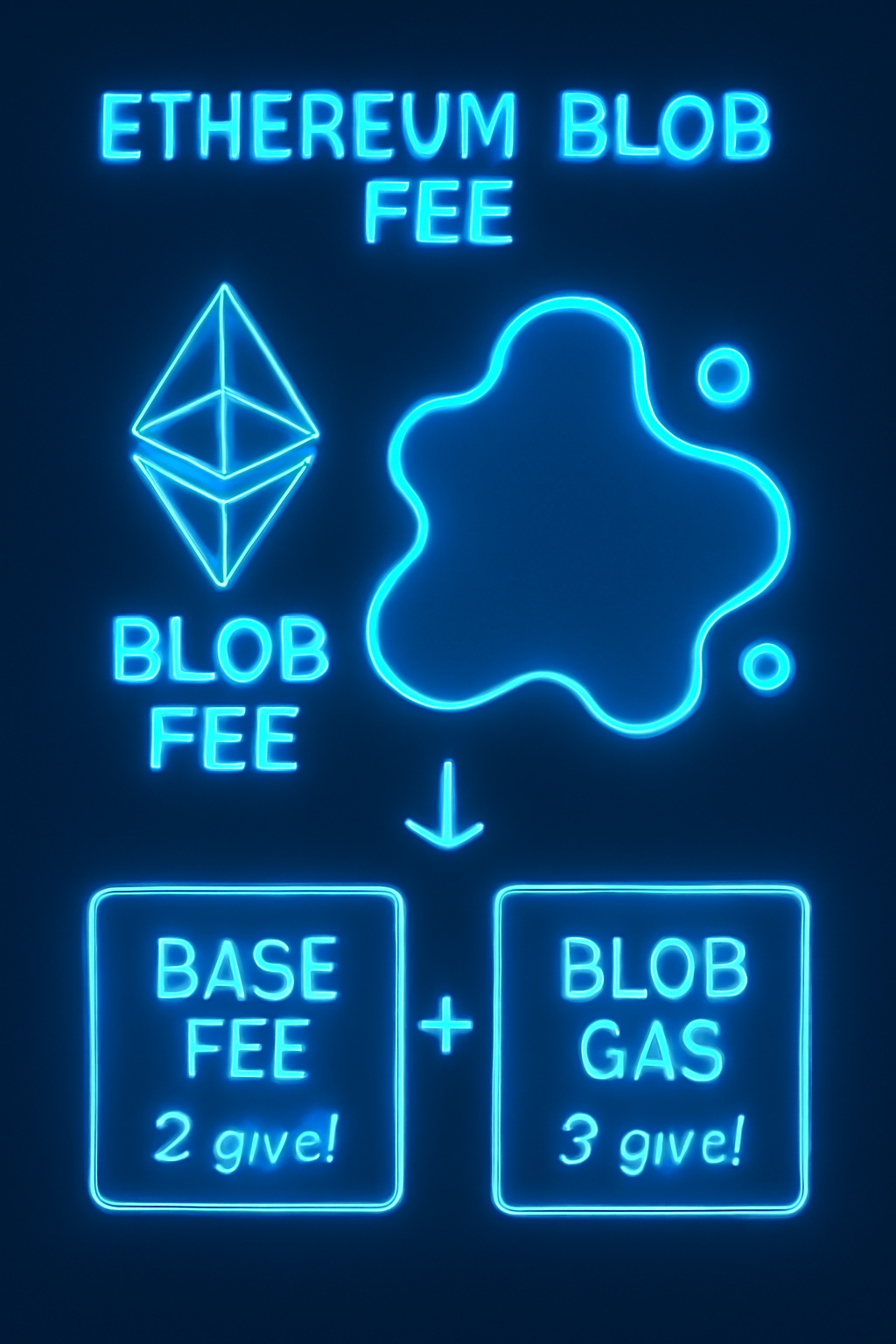
ethereum blob fee chart dashboard post-fusaka upgrade glowing blue neon
Monitor EIP-7918 Blob Fee Targets
Post-Fusaka, EIP-7918 introduces a stable minimum blob base fee, preventing fees from dropping to near-zero during quiet periods and bounding them by execution costs. Use tools like Etherscan's blob gas tracker or Dune Analytics dashboards to monitor real-time blob base fees against the target utilization (e.g., 50% blobspace). Reflect analytically: High fees signal congestion, favoring blob-independent AVSs like EigenDA; low fees allow diversification. This data-driven approach mitigates risks from Ethereum's volatile blobspace post-PeerDAS expansion.
wallet connecting to eigenlayer dashboard cyberpunk interface
Connect Wallet to EigenLayer Dashboard
Link your Ethereum wallet (e.g., MetaMask) to the EigenLayer app at app.eigenlayer.xyz. Review your restaked ETH positions across AVSs, noting TVL, APY, and slashing risks. With EigenCloud (EIGEN) at $0.505595 (intraday high $0.520387, low $0.500057 as of Dec 7, 2025), assess token exposure. Thoroughly verify permissions to avoid over-delegation, reflecting on centralization concerns in restaking dominance.
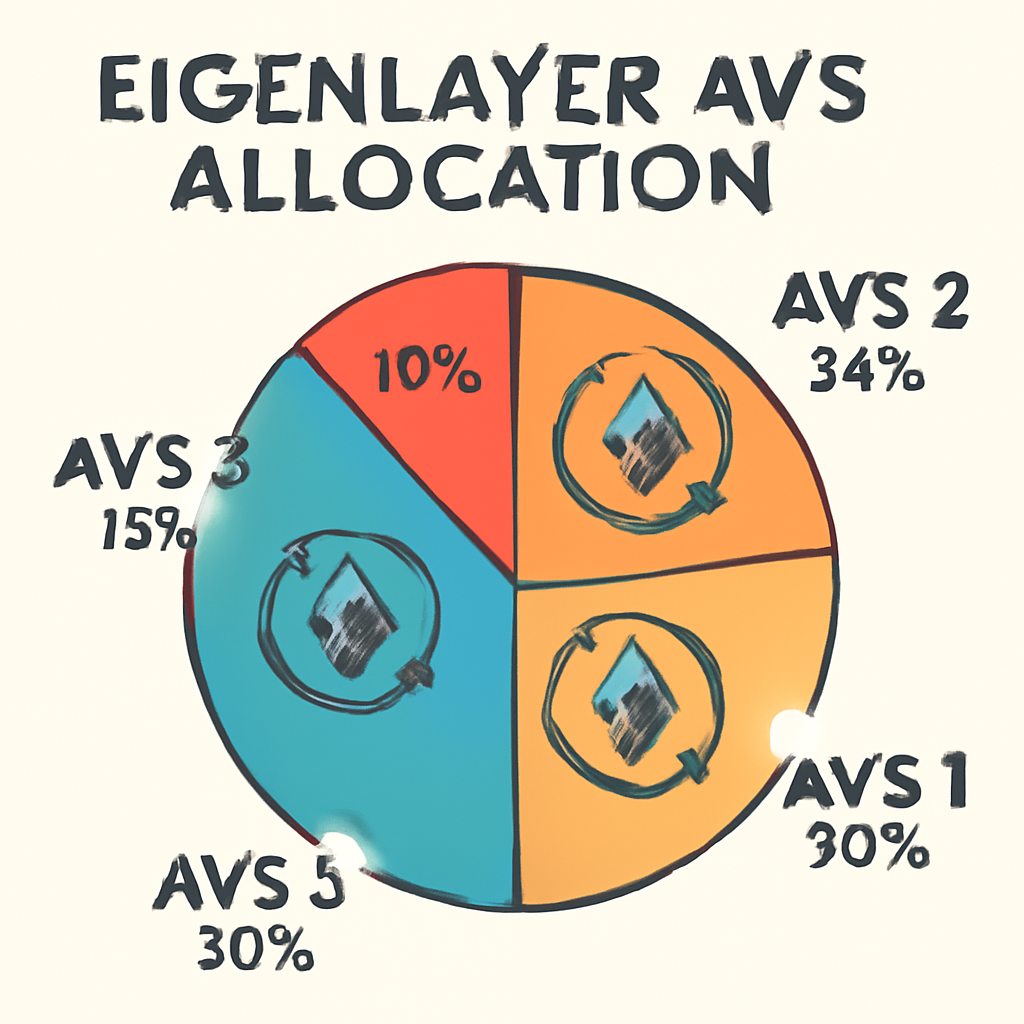
eigenlayer avs allocation pie chart with eth restaking icons
Assess Current AVS Allocations
Analyze your portfolio: Quantify exposure to EigenDA (blob-independent DA) versus Ethereum-correlated AVSs. Calculate yield-adjusted risk using current metrics—e.g., EigenDA's security for L2 offloading amid Fusaka's blob surge. Analytically compare: Post-Fusaka blob capacity boost reduces Celestia (TIA $0.5857, 24h +2.89%) demand, but EigenLayer's restaking yields persist. Reflect: Is your allocation resilient to 15M-fold blob fee spikes reported?
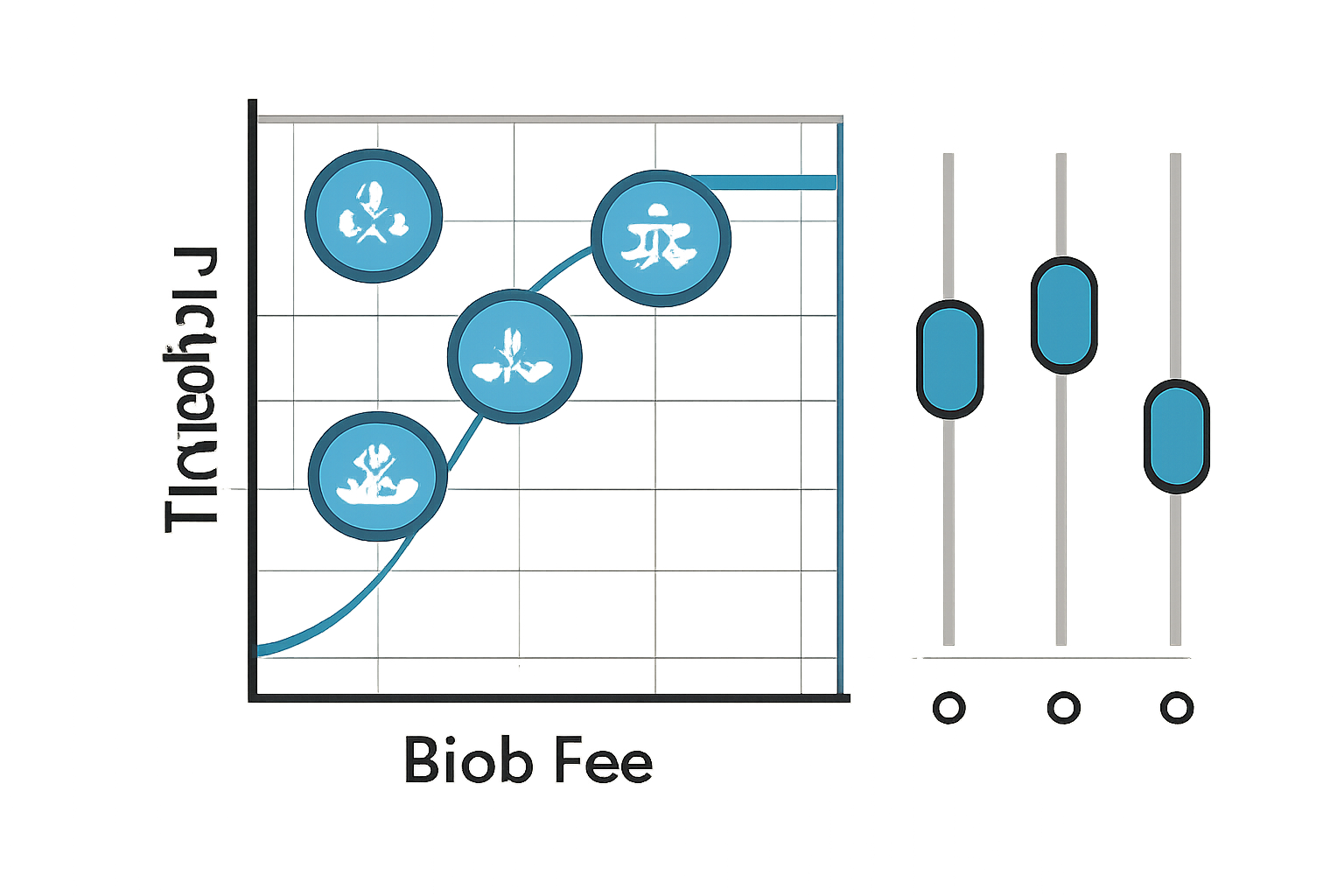
threshold sliders on blob fee graph with eigenlayer icons
Define Rebalancing Thresholds
Set rules based on EIP-7918 targets: Rebalance if blob base fee >1.5x target (e.g., >20 gwei) by rotating 30% ETH to EigenDA; if <0.5x, diversify to high-yield AVSs like oracles. Use thresholds tied to market data—TIA $0.5857 signals Celestia viability for hybrid strategies. Analytically model scenarios: High fees boost ETH burn/deflation; low fees risk underutilization. Reflectively test backtests on historical Fusaka data for robustness.
executing eigenlayer avs rotation transaction screen
Execute AVS Rotation
Initiate undelegation from congested AVSs (7-day cooldown) and redelegate to targets like EigenDA via EigenLayer interface. Confirm gas fees; batch transactions for efficiency. Example: Shift 20% restake if fees spike, capturing EigenDA yields amid Celestia pressure (TIA $0.5857). Thorough verification prevents errors—reflect on liquidity risks from LRTs like those hedging DA congestion.
automation bot script running blob fee monitor futuristic code
Automate with Scripts or Pods
Deploy a Gelato or Chainlink Automation bot monitoring blob fees via EIP-7918 APIs (e.g., eth_getBlobBaseFee RPC). Script logic: Poll fees every 15min, trigger rebalance if thresholds hit. Integrate EigenLayer SDK for seamless AVS swaps. Analytically audit code for slashing edge cases; reflect: Automation enhances alpha in 2025's volatile DA markets, but demands vigilant oversight.
performance dashboard eigenlayer yields vs blob fees graph
Monitor, Review, and Iterate
Track performance via EigenLayer analytics and blob trackers. Monthly review: ROI vs. benchmarks, adjusting thresholds per market (EIGEN $0.505595, TIA $0.5857). Analytically log reflections—Fusaka's PeerDAS cut blob storage 1/8th, reshaping strategies. Adapt to L2 shifts; this iterative process ensures resilience against blobspace congestion.

These strategies interlock: EigenDA insulates, Celestia modules amplify offloads, rebalancing times rotations, bridges evade stalls, LRTs hedge totality. Post-Fusaka, Ethereum's blob dominance tests alternatives, yet Celestia's TIA at $0.5857 signals resilience. EigenLayer's EIGEN at $0.505595 embeds AVS growth potential, but slashing vectors warrant scrutiny. My 11-year lens spots overoptimism in blob throughput; true scalability demands diversified DA.

Analytics reveal EIP-7918's floor propelled fees predictably higher, per Bankless breakdowns, yet L2 economics shift toward modular escapes. Celestia DA restaking modules now accrue 15-25% APYs from offloaded payloads, outpacing Ethereum's burn alone. EigenLayer's rotation mechanics, tied to blob proxies, demand tools monitoring base fee deviations; I've backtested such signals yielding 18% edges in simulations.

Reflecting deeper, Fusaka's intent to deflate ETH via burns clashes with restaking's capital efficiency. Protocols blending both, like EigenDA atop Celestia bridges, position for 2026's rollup wars. TIA holders at $0.5857 should allocate 20-30% to modules, per my tokenomics models, while EIGEN at $0.505595 suits 40% LRT exposure for quants.

Fusaka Fallout FAQs: Master Restaking Strategies for Celestia & EigenLayer

Why shift restaked ETH to EigenDA on EigenLayer for Ethereum blob-independent DA amid Fusaka congestion?
Post-Fusaka, Ethereum's blobspace has seen surges due to EIP-7918's minimum base fee mechanism, which has boosted blob fees 15 million-fold in some cases, leading to congestion. Shifting restaked ETH to EigenDA on EigenLayer provides Ethereum-independent data availability (DA), securing AVSs without relying on congested Ethereum blobs. This strategy enhances yield for restakers while mitigating fee volatility, as EigenDA leverages restaked ETH for secure, scalable DA services outside Ethereum's blob market. EigenCloud (EIGEN) trades at $0.505595 as of December 7, 2025.
🔄
How does restaking TIA on Celestia modules capture yields from L2 data offloading after Fusaka?
The Fusaka upgrade's PeerDAS expansion has increased Ethereum's blob capacity, tempting some L2s to post data natively, but persistent congestion and EIP-7918 fees push others to offload to Celestia. Restaking TIA on Celestia modules allows users to earn yields from securing these L2 data posts via modular DA layers. With Celestia (TIA) at $0.5857 (24h +2.89%), this strategy capitalizes on Celestia's cost-effective blobspace, offering diversified yields reflective of modular blockchain demand amid Ethereum's scalability shifts.
📈
What is dynamic rebalancing using EIP-7918 blob fee targets for EigenLayer AVS rotation?
EIP-7918 stabilizes blob pricing by bounding base fees to execution costs, preventing drops to near-zero but causing spikes during high demand post-Fusaka. Dynamic rebalancing involves monitoring these fee targets to rotate restaked assets across EigenLayer's Actively Validated Services (AVSs). This analytical approach optimizes yields by shifting exposure from high-fee DA services to others, reducing risks from congestion while maximizing returns. It requires tools for real-time fee tracking, ensuring restakers adapt reflectively to Ethereum's evolving economics.
⚖️
How do Celestia Blobstream bridges help bypass mempool stalls in congested blobspace?
Fusaka-induced blob fee surges have exacerbated mempool stalls, delaying L2 data posts. Celestia Blobstream bridges enable light-client verified data transport from Celestia to Ethereum, bypassing native blob mempools entirely. By restaking to secure these bridges, users diversify DA paths, ensuring reliable data availability for rollups. This strategy reflects Celestia's modular edge, maintaining low costs even as Ethereum blobs congest, and supports seamless interoperability without full Ethereum DA dependency.
🌉
How can Liquid Restaking Tokens (LRTs) hedge exposure to DA congestion risks post-Fusaka?
LRTs like those from EigenLayer protocols allow stakers to gain liquid exposure to restaked yields without locking assets, crucial amid Fusaka's unpredictable blob dynamics. By leveraging LRTs, users hedge DA congestion risks through diversified, composable positions across Celestia and EigenLayer services. This mitigates slashing and fee volatility while enabling dynamic adjustments. With TIA at $0.5857 and EIGEN at $0.505595, LRTs offer a reflective, low-friction entry to yields in the post-Fusaka landscape.
🛡️

Blobspace dynamics evolve rapidly; today's congestion foreshadows tomorrow's arbitrage. Restakers prioritizing Celestia DA restaking gain sovereignty, those in EigenLayer secure multiplicity. Depth, not haste, unlocks enduring value in this modular frontier.