
What Restaking in 2026 Actually Means
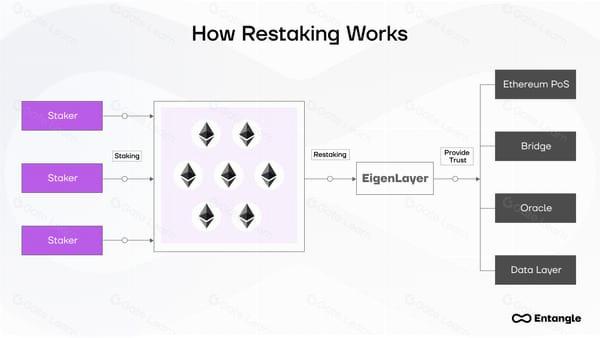
Restaking in 2026 is no longer just a yield hack; it is a structural shift in how Ethereum security is distributed. Instead of staking ETH once to secure the base layer, you stake it to secure multiple protocols simultaneously. This mechanism, popularized by EigenLayer V2, allows validators to reuse their existing stake to provide cryptographic security to modular infrastructure, such as oracles, bridges, and data availability layers.
The tradeoff is direct: higher yields come with concentrated risk. If a restaked protocol fails or gets slashed, your underlying ETH is at stake. In 2026, the market has moved past experimental phases into a more mature landscape where Liquid Restaking Tokens (LRTs) offer a middle ground. These tokens let you participate in restaking without running your own validator node, pooling liquidity to access better yields while spreading some of the operational risk.
For most participants, the choice now comes down to risk tolerance and capital efficiency. Are you willing to lock up ETH for longer periods to secure new networks, or do you prefer the liquidity of an LRT? Understanding these mechanics is essential before allocating capital in this high-stakes environment.
Restaking 2026 choices that change the plan
Restaking amplifies yield by reusing staked ETH to secure additional decentralized services, but it introduces a new layer of smart contract and slashing risk [[4]]. In 2026, the landscape is defined by the tension between maximizing APY and minimizing exposure to protocol failures. Evaluating these tradeoffs requires looking beyond headline yields to understand the underlying security assumptions and liquidity constraints.
The primary decision revolves around the choice between native restaking and Liquid Restaking Tokens (LRTs). Native restaking offers direct control and potentially higher yields but requires significant technical expertise to manage keys and monitor slashing conditions. LRTs, such as those issued by EigenLayer or Jito, provide liquidity and ease of use but introduce intermediary smart contract risks and fee structures that can erode net returns [[3]].
Key Factors to Evaluate
When comparing restaking options, focus on these concrete metrics:
- Slashing Risk: Does the protocol have insurance or a risk fund? Native restakers bear full slashing liability, while LRTs often distribute this risk across a broader pool.
- Liquidity Lock-up: Can you withdraw your stake instantly? LRTs offer tradable tokens, but the underlying restaked capital may still be locked during unbonding periods.
- Yield Composition: Is the yield from Ethereum consensus rewards, AVS (Actively Validated Service) fees, or token emissions? Emission-heavy yields are often unsustainable and volatile.
- Counterparty Exposure: How many layers of smart contracts are involved? Each LRT layer adds potential attack surface.
Comparison of Restaking Approaches
The table below contrasts the two main approaches available in 2026. Choose the column that aligns with your technical comfort and risk tolerance.
| Feature | Native Restaking | Liquid Restaking (LRT) |
|---|---|---|
| Yield Potential | Higher (no intermediary fees) | Moderate (fees deducted) |
| Liquidity | Low (locked until withdrawal) | High (tradable on DEXs) |
| Technical Barrier | High (key management, monitoring) | Low (user-friendly interfaces) |
| Slashing Risk | Direct and full liability | Distributed or insured (varies) |
| Smart Contract Risk | Lower (fewer layers) | Higher (intermediary contracts) |
Deciding Your Strategy
For most investors, LRTs provide a practical balance of yield and liquidity, especially when using established protocols with audited code and insurance funds [[1]]. However, if you are seeking maximum yield and have the infrastructure to manage security, native restaking on EigenLayer V2 remains the most direct path. Always calculate the net APY after fees and consider the worst-case scenario of a smart contract exploit before committing capital.
Choose the next step
Restaking works best as a clear sequence: define the constraint, compare the realistic options, test the tradeoff, and choose the path with the fewest hidden costs. That order keeps the advice usable instead of decorative. After each step, pause long enough to check whether the recommendation still fits the reader's actual situation. If it depends on perfect timing, unusual access, or a best-case budget, include a simpler fallback.

Avoiding Weak Restaking Options
Restaking amplifies returns, but it also amplifies risk. Not every liquid restaking token (LRT) or protocol offers genuine value. Many projects rely on unsustainable incentive structures or opaque security models. Identifying weak options requires looking past yield headlines.
The Inflationary Trap
Some LRTs pay high yields by printing their own tokens. This creates a feedback loop where new supply must constantly enter the market to maintain price stability. If the underlying protocol revenue does not cover this dilution, the token price collapses. Look for protocols where yields come from actual economic activity, not just token emissions.
Opaque Security Assumptions
EigenLayer V2 introduces complex slashing conditions. If a protocol does not clearly explain how its restaked assets are secured, you are taking on unknown risk. Weak options often hide the fact that their smart contracts have not undergone rigorous auditing. Check for independent security reports and clear slashing mechanisms before committing capital.
Poor Liquidity Management
High yields mean nothing if you cannot exit your position. Some LRTs suffer from deep slippage or locked withdrawal periods during market stress. Compare the liquidity depth of the LRT against its total value locked. If the liquidity is thin, even a small sell-off can crash the price.
Decision Framework
| Feature | Strong Option | Weak Option |
|---|---|---|
| Yield Source | Protocol revenue, staking rewards | Token emissions, inflation |
| Security | Audited, clear slashing rules | Unaudited, opaque logic |
| Liquidity | Deep pools, fast withdrawals | Thin pools, lock-ups |
Focus on protocols with transparent revenue models and robust security. Avoid anything that promises outsized returns without clear economic backing.
No comments yet. Be the first to share your thoughts!