
Restaking in 2026: The Security Premium
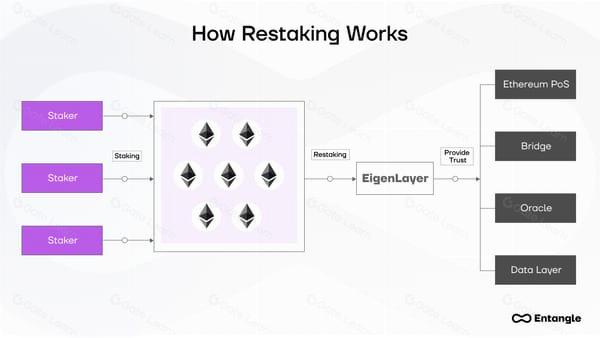
The restaking landscape has shifted from experimental beta to a mature infrastructure layer. By 2026, the primary value proposition is no longer just yield farming; it is the "security premium" generated by reusing staked ETH to secure new networks. Solo staking on Ethereum now offers a base yield of approximately 2.8–3.2%, but restaking protocols layer additional returns on top of this foundation by selling security services to other chains.
This structural change means your staked ETH is working harder, but it is also exposed to more complex risk vectors. The choice of Liquid Restaking Token determines how much of that extra yield you keep versus how much risk you assume. As the ecosystem matures, the gap between safe, institutional-grade restaking and high-yield, high-risk strategies has widened significantly.
For 2026, the focus is on transparency and slasher protection. Protocols that offer clear slashing insurance and modular security layers are becoming the standard. Understanding these mechanics is essential before committing capital, as the complexity of restaking layers can obscure the true risk of your position.
Restaking 2026 choices that change the plan
Choosing a restaking strategy in 2026 requires weighing yield against specific risk vectors. While solo staking on Ethereum offers a stable 2.8–3.2% base yield, restaking protocols add a "security premium" by deploying your stake across Active Validator Sets (AVS). This structure transforms trapped capital into a multi-layer yield engine, but it introduces new variables that don't exist in traditional proof-of-stake models.
The primary tradeoff centers on smart contract exposure. When you restake, you are not just betting on Ethereum's consensus; you are also betting on the code integrity of the AVS you support. If a specialized AVS suffers a bug or a slashing event, your underlying ETH could be penalized. This creates a layered risk profile: the base risk of Ethereum staking plus the specific risk of each additional service you secure.
Liquidity and accessibility also vary significantly between protocols. Liquid Restaking Tokens (LRTs) like those from EigenLayer allow you to maintain liquidity while earning yield, but they often come with a discount or "haircut" compared to direct staking. You must evaluate whether the additional yield justifies the potential liquidity constraints and the complexity of managing multiple token positions.
To help you compare these options, the table below outlines the core tradeoffs between common 2026 restaking approaches.
| Strategy | Yield Potential | Primary Risk | Liquidity |
|---|---|---|---|
| Solo Staking | 2.8–3.2% | Slashing (minimal) | Low (locked) |
| LRTs (e.g., EtherFi, Renzo) | 3–6% | Smart contract bugs | High (tradable) |
| Multi-AVS Restaking | 6%+ | Complex slashing vectors | Variable |
How to choose the right restaking strategy
Deciding between solo staking, liquid restaking tokens (LRTs), or a hybrid approach depends on your tolerance for complexity and your need for liquidity. The core tradeoff is simple: solo staking offers maximum security and control but locks your capital, while LRTs provide flexibility and potentially higher yields by adding a "security premium" on top of the base Ethereum yield.
1. Assess your liquidity needs
If you plan to hold your position for the long term without needing immediate access to your staked ETH, solo staking through a reputable client like Lido or Rocket Pool may be sufficient. However, if you anticipate needing to adjust your portfolio or participate in other DeFi opportunities, LRTs are the more practical choice. They allow you to keep your staking rewards while using the token as collateral elsewhere.
2. Evaluate the security premium
As of 2026, restaking protocols offer a specialized security premium that boosts yields above the standard 2.8–3.2% base yield from solo staking. This premium compensates you for providing additional security to other networks or services. You should compare the specific risk profiles of different LRT providers to ensure the extra yield justifies the additional smart contract risk.
3. Diversify across providers
Rather than concentrating all your staked assets in a single protocol, consider spreading your exposure across multiple LRT providers. This approach mitigates the risk of a single point of failure, such as a smart contract vulnerability or a governance issue. Look for platforms that have undergone rigorous audits and have a transparent track record.
4. Monitor the technical landscape
The restaking ecosystem evolves rapidly with updates like EigenLayer v2. Stay informed about protocol changes, fee structures, and yield fluctuations. Regularly review your positions to ensure they still align with your risk tolerance and investment goals. Use technical charts to track ETH price movements and yield trends to make informed adjustments.
5. Start small and scale
If you are new to restaking, begin with a small allocation to understand the mechanics and risks. Once you are comfortable with the process, you can gradually increase your exposure. This gradual approach allows you to learn from experience without risking significant capital upfront.
Watch out for weak options and misleading claims
Not every liquid restaking token delivers on its promises. In 2026, the gap between marketing and reality has widened, with several protocols offering yields that look attractive but carry hidden risks. Before committing capital, you need to separate the robust infrastructure from the speculative noise.
Beware of unsustainable yield promises.
Some LRTs advertise yields significantly higher than the base Ethereum staking rate of 2.8–3.2%. While a "security premium" is legitimate, excessive returns often signal risky underlying strategies or unsustainable tokenomics. If a protocol’s yield relies heavily on its own native token emissions rather than real network activity, it is vulnerable to a death spiral. Treat these high-yield offers with extreme caution.
Check for centralized points of failure.
A major weakness in many restaking solutions is the reliance on centralized operators or single points of failure. If a protocol depends on a single validator set or a non-audited smart contract for its core logic, your restaked ETH is at risk. Look for protocols with decentralized operator networks, transparent slashing protection mechanisms, and independent security audits. Avoid any option that lacks clear, verifiable decentralization metrics.
Understand the liquidity trade-offs.
Liquidity is often touted as a key benefit, but many LRTs have poor secondary market depth. This means you might struggle to sell your tokens quickly without accepting a significant discount. Additionally, some LRTs have complex redemption processes that can lock up your funds during periods of high volatility. Always verify the liquidity pool size and redemption terms before investing. A token that is hard to sell is not truly liquid.
Restaking 2026: what to check next
Restaking has moved from a niche experiment to a core part of Ethereum’s security model. As EigenLayer v2 matures, the line between staking and securing other networks continues to blur. Here are the practical answers to the most common questions readers ask before committing capital.
Is 2026 a good year to buy Bitcoin?
While this guide focuses on Ethereum restaking, Bitcoin’s market cycle often dictates broader crypto liquidity. In 2026, Bitcoin remains the primary barometer for institutional risk appetite. If BTC is consolidating or trending upward, capital typically flows into higher-yield altcoin strategies like restaking. If BTC is volatile or declining, capital tends to flee to stablecoins or cash. Monitor Bitcoin’s dominance to gauge the risk-on environment necessary for restaking yields to hold.
How low can Ethereum go in 2026?
Ethereum’s price floor is heavily influenced by the amount of ETH staked and restaked. As more ETH enters restaking protocols like EigenLayer, it becomes less liquid and harder to sell quickly. This "locked" supply can reduce downward pressure during market dips. However, if restaking protocols face technical failures or slashing events, panic selling could drive prices lower. The floor is generally supported by the base yield of ~2.8–3.2% from solo staking, which provides a fundamental value anchor.
When did ETH go proof of stake?
Ethereum completed its transition from proof-of-work to proof-of-stake with "The Merge" in September 2022. This shift eliminated energy-intensive mining and introduced staking as the primary security mechanism. Restaking, which allows stakers to reuse their ETH to secure additional services, is a layer built on top of this proof-of-stake foundation. It emerged in 2023 with EigenLayer and has scaled rapidly through 2024 and 2025 into 2026.
Can Ethereum reach $5,000?
Reaching $5,000 is a common target for ETH bulls in 2026, driven by the deflationary pressure of staking and the yield generated by restaking. The "security premium" added by restaking makes holding ETH more attractive than holding it in cold storage. If institutional adoption of EigenLayer v2 accelerates, the increased demand for ETH as a security asset could push prices toward this level. However, this depends on stable macroeconomic conditions and the continued security of restaking protocols.
No comments yet. Be the first to share your thoughts!