
The Yield Engine Shift
Restaking remains a central pillar of the 2026 crypto economy because the industry is still searching for sustainable yield and reusable security. What began as a speculative experiment on Ethereum has evolved into a foundational infrastructure layer. Instead of treating staked assets as static collateral, restaking allows validators to reuse their Ethereum security to back other decentralized services. This creates a compounding yield engine that keeps capital efficient and active across the entire ecosystem.
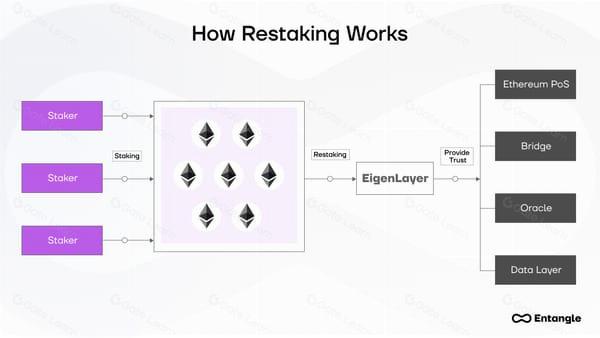
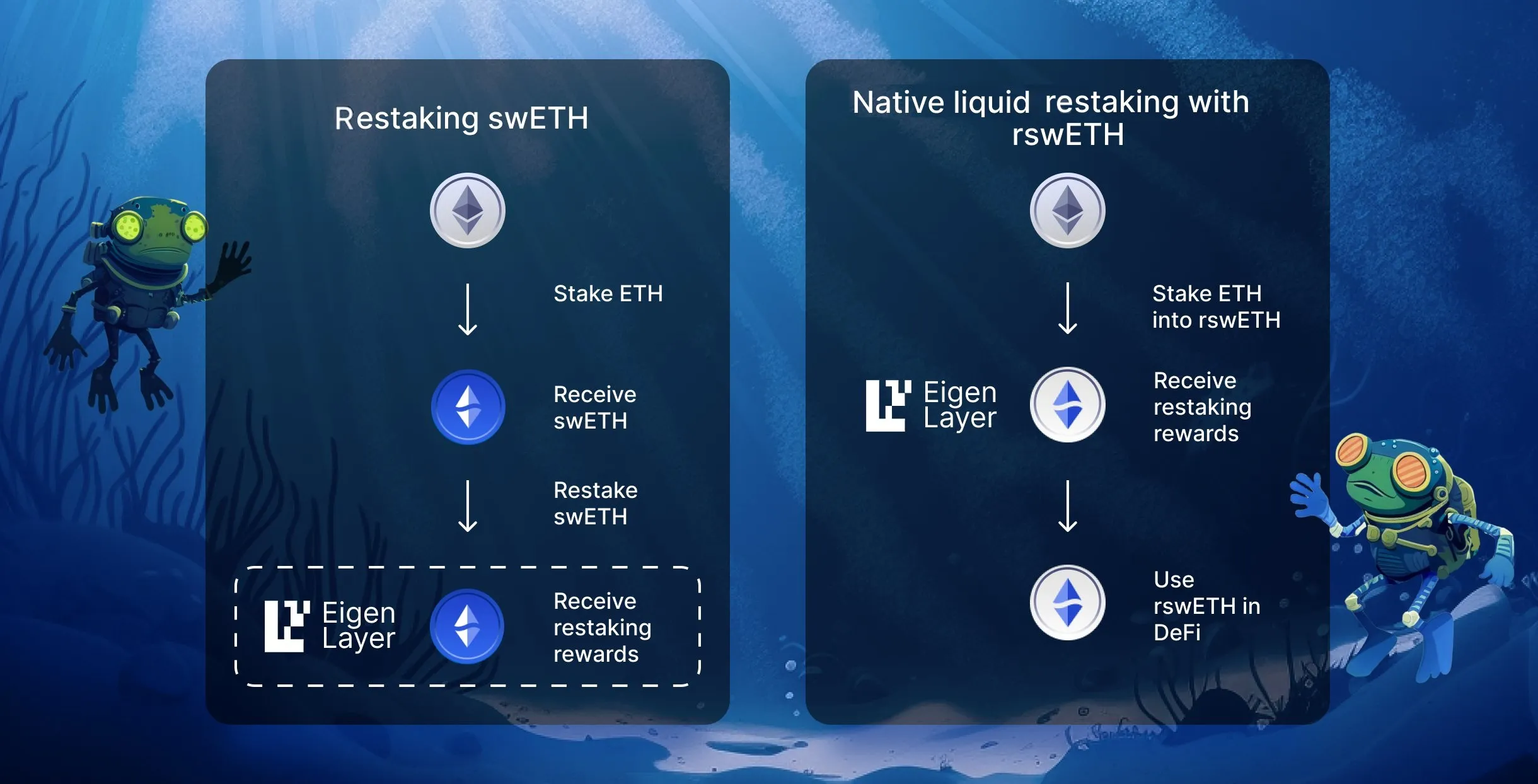
The core mechanism is straightforward but powerful. When you stake ETH, you provide security to the Ethereum network. With restaking, you pledge that same staked ETH—or the liquid staking token representing it—to secure additional protocols like oracles, bridges, or AI networks. In return, you earn additional rewards from those services. This effectively turns a single asset into a multi-purpose security provider, capturing yield from multiple streams simultaneously.
This shift matters because it solves a persistent problem: underutilized capital. Traditional staking locks up ETH with a single return stream. Restaking unlocks that value by allowing the same security deposit to serve multiple purposes. It is less about mining new coins and more about leveraging existing proof-of-stake infrastructure to support a broader web of decentralized applications. As EigenLayer and Liquid Restaking Tokens (LRTs) mature, this model is becoming the default for how institutional and retail capital seeks yield in a post-hype market.
EigenLayer V2 upgrades and AVS growth
EigenLayer V2 marks a structural shift for the restaking ecosystem, moving beyond simple yield aggregation to a more robust security framework. The upgrade addresses previous limitations in operator incentives and slashing conditions, making the network more resilient for both validators and the protocols they support. This evolution is critical as the demand for shared security grows across decentralized applications.
Operator security improvements
The core of V2 lies in enhanced operator security. Previous iterations faced criticism for complex slashing risks and misaligned incentives. V2 introduces refined economic staking models that better align operator behavior with network health. By tightening the parameters around slashing and improving the clarity of liability, EigenLayer reduces the operational risk for validators. This makes it safer for large-scale operators to participate without fearing disproportionate penalties for minor infractions.
Expansion of the AVS ecosystem
Active Verification Services (AVSs) are the engine of EigenLayer’s utility. V2 lowers the barrier to entry for new AVS developers, allowing them to tap into EigenLayer’s pooled security more easily. This has led to a surge in diverse services, from oracle networks to decentralized storage solutions. The expansion is not just about quantity; it is about the quality and variety of services that can now rely on Ethereum’s security without building their own validator sets from scratch.
Market context and performance
The growth of EigenLayer V2 correlates with broader market trends in restaking. As investors seek sustainable yield, the ability to restake ETH for multiple rewards streams remains a compelling narrative. The following chart illustrates the market context for Ethereum, the primary asset driving restaking activity.
Top Liquid Restaking Protocols Compared
Use this section to make the Restaking decision easier to compare in real life, not just on paper. Start with the reader's actual constraint, then separate must-have requirements from details that are merely nice to have. A practical choice should survive normal use, maintenance, timing, and budget. If a recommendation only works in an ideal situation, call that out plainly and give the reader a fallback path.
| Factor | What to check | Why it matters |
|---|---|---|
| Fit | Match the option to the primary use case. | A good deal still fails if it does not fit the job. |
| Condition | Verify age, wear, and service history. | Hidden condition issues erase upfront savings. |
| Cost | Compare purchase price with likely upkeep. | The cheapest option is not always the lowest-cost option. |
Risks and Slashing Mechanics Explained
Use this section to make the Restaking decision easier to compare in real life, not just on paper. Start with the reader's actual constraint, then separate must-have requirements from details that are merely nice to have. A practical choice should survive normal use, maintenance, timing, and budget. If a recommendation only works in an ideal situation, call that out plainly and give the reader a fallback path.
The simplest way to use this section is to write down the must-have criteria first, then compare each option against those criteria before weighing nice-to-have features.
How to Choose a Restaking Strategy
Restaking works best as a clear sequence: define the constraint, compare the realistic options, test the tradeoff, and choose the path with the fewest hidden costs. That order keeps the advice usable instead of decorative. After each step, pause long enough to check whether the recommendation still fits the reader's actual situation. If it depends on perfect timing, unusual access, or a best-case budget, include a simpler fallback.

Restaking 2026: common: what to check next
Understanding the mechanics of restaking requires separating current market realities from technical possibilities. Here are direct answers to the most frequent questions about Ethereum staking, mining, and liquidity.
Is Ethereum mining still possible in 2026?
No. Ethereum permanently ended Proof of Work mining on September 15, 2022, following "The Merge." The network now operates exclusively on Proof of Stake, meaning hardware-based mining rigs cannot generate ETH. Any service claiming to offer "Ethereum mining" is likely a scam or a wrapper for staking rewards.
What is the difference between staking and restaking?
Standard staking involves locking ETH to secure the Ethereum network and earning a single yield. Restaking takes that already-staked ETH and pledges it to secure additional decentralized services, such as oracles or sidechains. This allows you to earn multiple reward streams simultaneously from the same capital, though it increases complexity and risk exposure.
How long does it take to unstake ETH?
Unstaking ETH from the Ethereum consensus layer requires a mandatory 24-hour withdrawal queue. However, this timeline varies significantly with Liquid Restaking Tokens (LRTs). While the underlying ETH may take a day to exit, many LRT protocols offer instant liquidity by allowing you to trade your tokenized receipt, bypassing the queue entirely at the cost of a small spread.
No comments yet. Be the first to share your thoughts!