
What restaking 2026 means for stakers
Restaking in 2026 is no longer a niche experiment; it is the primary mechanism for capital efficiency in the Ethereum ecosystem. While basic staking involves locking ETH to secure the base layer, restaking allows stakers to reuse that same ETH to secure additional decentralized services. This structural shift transforms ETH from a passive store of value into an active security resource, creating a "shared security" model that benefits the entire network.
The difference between staking and restaking is the difference between a single-purpose tool and a multi-tool. When you stake ETH, you earn a base yield for validating blocks. When you restake, you delegate that same security to protocols like EigenLayer, earning a "security premium" on top of your base rewards. As of March 2026, solo staking offers approximately 2.8–3.2% base yield, but restaking strategies can significantly enhance this through additional rewards from AVS (Actively Validated Services) and Liquid Restaking Tokens (LRTs).
EigenLayer V2 has matured this landscape by introducing more robust slashing conditions and broader interoperability. For stakers, this means higher potential returns but also more complex risk profiles. The yield is no longer just from block rewards; it is from securing oracle networks, bridges, and other critical infrastructure. This creates a deeper, more resilient economy where capital is utilized multiple times across different layers of the stack.
The market has responded to this efficiency. As ETH price action stabilizes, the demand for restaking capacity has grown, driving up the security premium. Stakers who understand the nuances of LRTs and EigenLayer V2 are positioned to capture yield that goes well beyond traditional staking rewards, effectively monetizing their security contribution in ways that were not possible just a few years ago.
How EigenLayer V2 Changes the Rules
EigenLayer V2 represents a structural shift from experimental shared security to a more resilient, standardized protocol. The 2026 upgrades address the fragmentation and operational complexity that plagued the early restaking era. For restakers, the primary change is the introduction of standardized slashing conditions and a more robust operator onboarding framework. This reduces the cognitive load of verifying individual Actively Validated Services (AVS) and concentrates risk management at the protocol level.
Operator Requirements and AVS Integration
The new operator model enforces stricter capital and performance requirements. Operators must now maintain higher minimum staking thresholds and provide detailed slashing history before accepting new AVS assignments. This gatekeeping mechanism aims to filter out low-quality operators who previously crowded the network. For AVS developers, integration is streamlined through standardized interfaces, allowing faster deployment without rewriting core security modules. This shift encourages a more stable ecosystem where operators can focus on performance rather than constant compliance firefighting.
Risk Distribution for Restakers
Restaked ETH risk is now more transparent. V2 introduces a risk-adjusted yield model that clearly separates slashing risk from market volatility. Restakers can see exactly which AVS they are securing and the associated penalty probabilities. This clarity allows for more informed capital allocation. Instead of blanket exposure, restakers can diversify across AVS with different risk profiles, reducing the chance of a single point of failure impacting their entire portfolio.
Top liquid restaking tokens compared
Liquid Restaking Tokens (LRTs) let you stake ETH while keeping it liquid, but the platforms differ in how they generate yield and manage risk. In 2026, Ether.fi, Renzo, and Kelp Network dominate the market, each offering distinct approaches to AVS (Actively Validated Service) integration and liquidity.
The core value proposition of LRTs is dual-layer yield. You earn base Ethereum staking rewards plus additional yield from participating in AVSs. However, the complexity of these mechanisms means the "best" token depends on whether you prioritize yield maximization or protocol security. Below is a direct comparison of the three leading options.
| Protocol | Ticker | Base Yield | AVS Strategy | Risk Profile |
|---|---|---|---|---|
| Ether.fi | eETH | ~3-4% | Multi-protocol (EigenLayer + others) | Moderate |
| Renzo | ezETH | ~3-4% | EigenLayer-native | Low-Moderate |
| Kelp Network | rsETH | ~3-4% | EigenLayer + LRT LRTs | Moderate-High |
Ether.fi is the largest LRT by total value locked, leveraging its eETH to participate in multiple restaking protocols beyond just EigenLayer. This multi-protocol approach can boost yields but introduces complexity. Renzo focuses on a streamlined EigenLayer-native experience, often appealing to users who prefer a simpler, more direct connection to the primary restaking layer. Kelp Network’s rsETH offers a flexible approach, allowing for additional composability with other LRTs, which can enhance yields but also increases smart contract risk.
When choosing an LRT, look beyond the headline yield. Consider the security model, the maturity of the AVS partnerships, and the liquidity depth of the token. For most users, starting with a well-established protocol like Ether.fi or Renzo provides a balance of yield and relative security. Always review the latest protocol audits and documentation before committing capital.
Security risks and slashing exposure
Use this section to make the Restaking decision easier to compare in real life, not just on paper. Start with the reader's actual constraint, then separate must-have requirements from details that are merely nice to have. A practical choice should survive normal use, maintenance, timing, and budget. If a recommendation only works in an ideal situation, call that out plainly and give the reader a fallback path.
The simplest way to use this section is to write down the must-have criteria first, then compare each option against those criteria before weighing nice-to-have features.
How to choose a restaking strategy
Selecting a restaking approach requires aligning your risk tolerance with your yield expectations. The core of Ethereum solo staking offers a base yield of approximately 2.8–3.2%, while restaking adds a specialized "security premium" on top. Your strategy should determine how much of that premium you are willing to risk for higher returns.
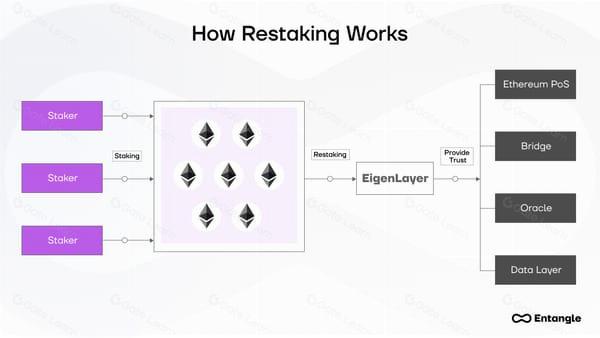
Decide if you require immediate access to your capital. Liquid Restaking Tokens (LRTs) allow you to trade or use your staked assets in DeFi protocols, providing flexibility. If you plan to hold through market cycles without touching the assets, traditional restaking through EigenLayer may suffice.
Understand the consequences of validator misbehavior. Direct restaking exposes you to full slashing penalties if the underlying validator acts maliciously. LRTs often distribute this risk across multiple operators, potentially reducing individual exposure but introducing smart contract complexity.
Look beyond the headline APY. High yields often come from short-term incentives or higher risk profiles. Verify the long-term sustainability of the yield sources, ensuring they are driven by genuine network demand for security rather than temporary subsidies.
No comments yet. Be the first to share your thoughts!