
What Restaking Means for 2026
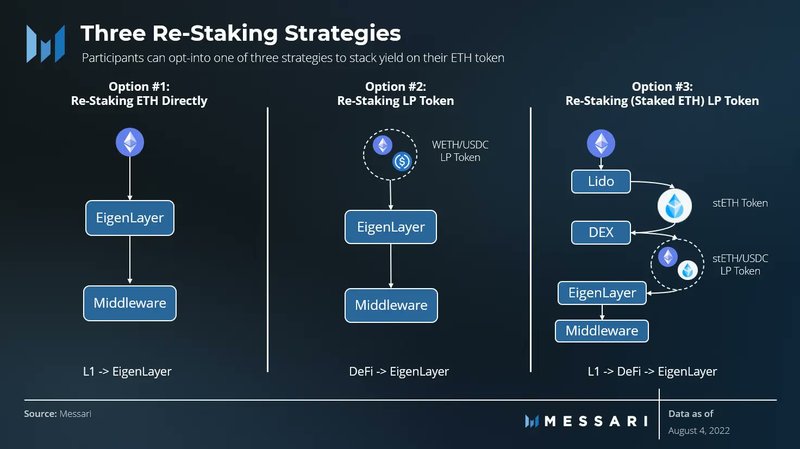
Restaking is the practice of using already-staked ETH to secure additional decentralized services. While standard staking involves locking ETH to validate Ethereum transactions, restaking allows that same capital to act as collateral for other protocols. This creates a shared security model where a single asset supports multiple networks simultaneously.
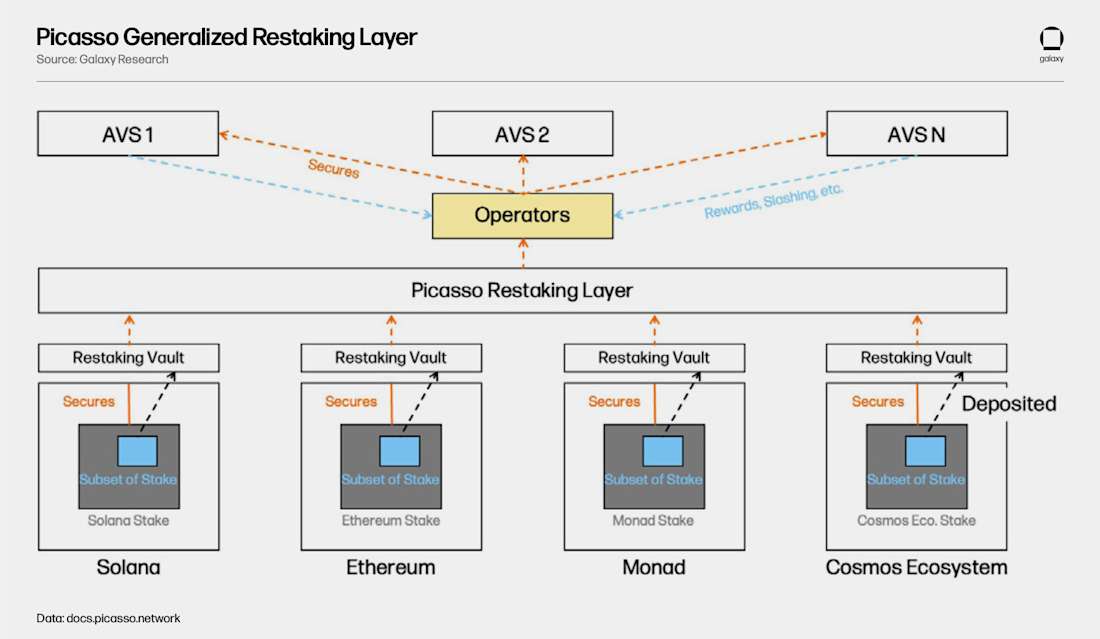
The mechanism is straightforward but carries significant implications for capital efficiency. Restakers earn rewards not just from Ethereum’s consensus layer, but also from the "Actively Validated Services" (AVSs) they choose to support. These AVSs can range from decentralized oracle networks to bridge validators and data availability layers. By reusing staked ETH, restakers potentially increase their yield without deploying additional capital.
However, this efficiency comes with concentrated risk. If a restaker’s assets are slashed for misbehavior on an AVS, the penalty applies to the underlying staked ETH. This means a failure in a secondary protocol can impact the primary Ethereum stake. As the restaking ecosystem matures in 2026, understanding this dual-layer risk is essential for anyone allocating capital in the Ethereum staking landscape.
EigenLayer V2 and the shift to shared security
EigenLayer V2 represents a structural upgrade to Ethereum’s restaking infrastructure, moving beyond simple yield aggregation to a more robust shared security model. By introducing modular consensus and enhanced slashing conditions, the protocol allows a broader set of Actively Validated Services (AVSs) to secure their networks using the same underlying ETH staking deposits. This shift transforms Ethereum stakers from passive yield seekers into active security providers for a diverse ecosystem of decentralized services.
The core innovation lies in how V2 manages risk and reward across these new AVSs. In the previous iteration, security was often siloed, limiting the types of services that could safely leverage Ethereum’s consensus power. V2 introduces a more granular framework where validators can opt into specific security modules, aligning their incentives with the unique requirements of each service. This modularity reduces systemic risk by preventing a failure in one AVS from cascading uncontrollably across the entire network.
For validators, the economic implications are significant. The expanded set of AVSs means more opportunities for additional yield, but it also requires a more sophisticated understanding of the specific risks associated with each service. Slashing conditions are now more clearly defined, ensuring that malicious behavior or negligence is penalized consistently across all secured networks. This clarity is essential for institutional participants who require predictable risk profiles before committing capital.
The market response to V2 has been reflected in the performance of restaking-related assets. As the network matures, the value accrual mechanisms become more sophisticated, moving beyond simple token emissions to more sustainable yield generation. Investors are closely watching how the expanded security model impacts the long-term viability of these new services and the overall health of the Ethereum staking ecosystem.
Leading liquid restaking tokens compared
The liquid restaking (LRT) sector has consolidated around three primary players: Ether.fi, Renzo, and KelpDAO. While all three leverage the EigenLayer protocol to secure Actively Validated Services (AVSs), their architectural approaches and risk profiles differ significantly. Understanding these distinctions is critical for allocating capital in a high-stakes environment where smart contract and slashing risks are ever-present.
Ether.fi dominates the market by capitalization, functioning as a liquid restaking protocol (LRP) that also offers liquid staking. Its strategy relies on a decentralized network of node operators, distributing risk across a broad validator set. Renzo positions itself as a modular restaking protocol, optimizing for capital efficiency and integration with other DeFi protocols through its EZETH token. KelpDAO, operating through its RSETH token, focuses heavily on institutional-grade infrastructure and risk management, offering a more conservative approach to restaking yields.
The following comparison highlights the core differences in yield generation, liquidity mechanisms, and underlying risk structures for these leading LRTs.
| Protocol | LRT Token | Primary Yield Source | Risk Profile | Liquidity Mechanism |
|---|---|---|---|---|
| Ether.fi | EETH | ETH Staking + AVS Slashing Rewards | Decentralized Node Operator Network | Native eETH + Liquid ETH (ezETH) |
| Renzo | EZETH | Restaking Rewards + AVS Incentives | Modular Restaking with Active Management | EZETH with DeFi Integration |
| KelpDAO | RSETH | EigenLayer Restaking Yields | Institutional-Grade Risk Management | RS-ETH with Yield Optimization |
Where the extra yield comes from—and what you could lose
Restaking yields are not magic. They are the sum of a base staking reward and a security premium paid by Actively Validated Services (AVSs) for decentralized compute or data availability. As of March 2026, solo staking on Ethereum offers a base yield of approximately 2.8–3.2%. The additional return comes from AVS operators who bid for this security to run their specific protocols, creating a layered yield engine that turns "trapped" staked capital into a multi-purpose resource.
This structure creates a high-stakes tradeoff. While you capture yield from multiple services simultaneously, you assume concentrated risk. If an AVS fails its obligations, the slashing conditions defined in the smart contracts can penalize your entire restaked balance, not just the portion allocated to that specific service. This is not a passive income stream; it is an active risk management exercise.
The smart contract risk is equally significant. Restaking introduces new code surfaces through EigenLayer contracts and individual AVS implementations. A vulnerability in any layer of this stack—from the core restaking protocol to the specific AVS logic—can lead to total loss of the underlying collateral. You are essentially betting on the security assumptions of multiple independent systems simultaneously.
How to choose a restaking strategy
Selecting a restaking strategy requires balancing technical competence against risk tolerance. The choice is not merely about yield; it is about deciding who holds the keys to your capital and how much operational complexity you are willing to manage. The landscape splits into three distinct paths: solo restaking for maximum control and yield, Liquid Restaking Tokens (LRTs) for liquidity and simplicity, and institutional solutions for compliance and custody.
Solo restaking involves directly managing your validator keys and selecting AVS operators. This path offers the highest potential returns because you capture the full yield without intermediary fees. However, it demands significant technical expertise. You must handle software updates, monitor slashing conditions, and manage the liquid staking token (LST) collateral. If you lack the infrastructure to monitor a validator 24/7, the risk of slashing outweighs the yield benefits.
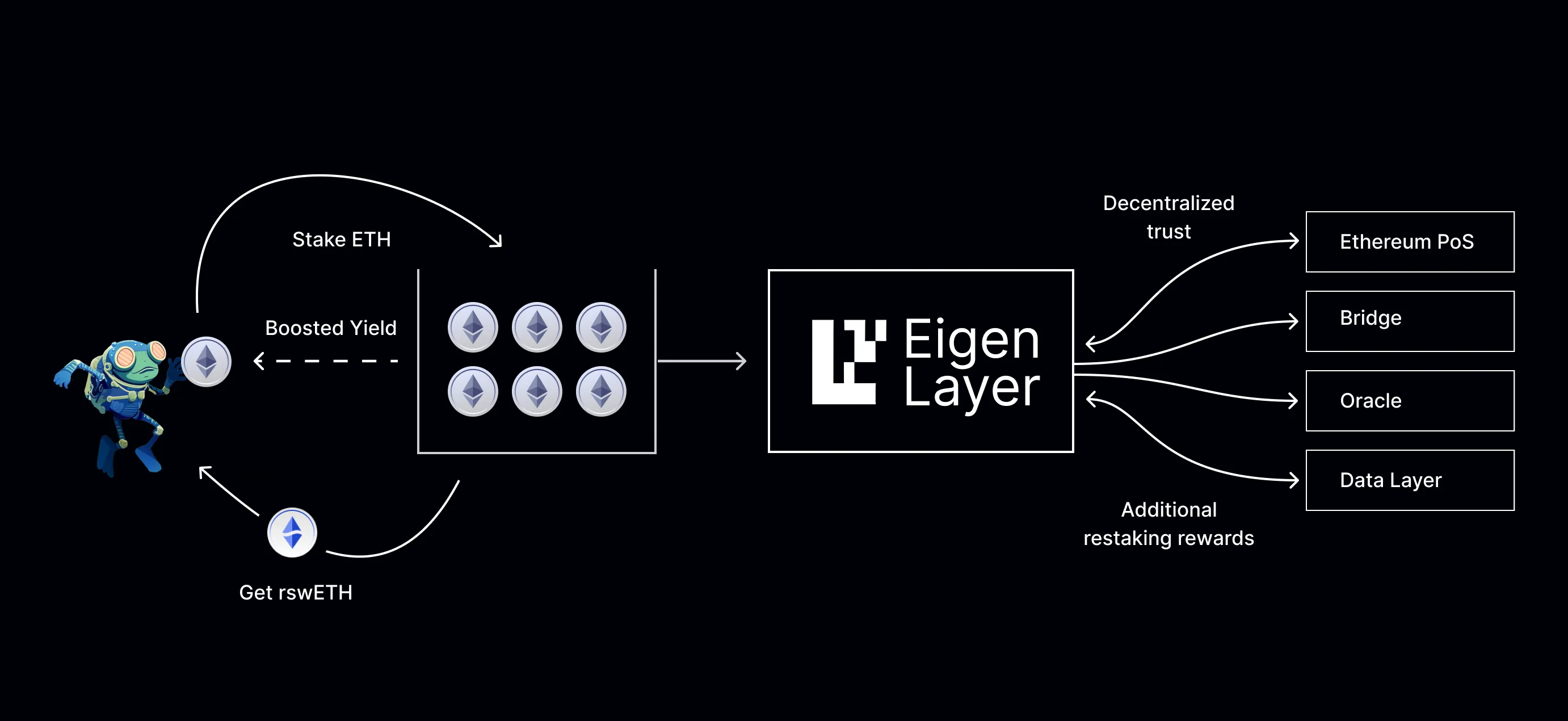
Liquid Restaking Tokens simplify the process by pooling your staked ETH into a protocol that manages the restaking operations. In exchange, you receive an LRT, which can be used in DeFi protocols while earning restaking rewards. This approach reduces technical barriers but introduces smart contract risk from the LRT provider. It is ideal for users who want exposure to restaking yields without sacrificing the liquidity of their underlying assets.
For large capital or regulated entities, institutional restaking platforms like BitGo provide qualified custody and real-time reward tracking. These solutions prioritize security and compliance over the absolute highest yield. They are designed for entities that cannot manage private keys directly or require audit trails for regulatory purposes. The trade-off is higher fees and less flexibility compared to decentralized alternatives.
Decision Framework
When comparing these options, consider the following trade-offs:
| Feature | Solo Restaking | LRT | Institutional |
|---|---|---|---|
| Technical Skill | High | Low | None |
| Yield Potential | Highest | Medium | Low |
| Liquidity | None | High | Low |
| Slashing Risk | Direct | Shared | Managed |
The choice depends on your specific constraints. If you are a technical validator seeking to maximize returns, solo restaking is the only path that captures full value. If you prioritize liquidity and ease of use, LRTs offer a balanced compromise. For those prioritizing security and compliance, institutional custody is the necessary standard.
Restaking questions answered
Restaking is a mechanism where stakers use their already-staked ETH to secure additional decentralized services, known as Actively Validated Services (AVSs). By reusing existing consensus power, restakers can earn extra rewards on top of their base ETH staking yield. This creates a shared security model that amplifies the utility of staked capital, though it introduces new risk vectors regarding slashing conditions across multiple protocols.
Is ETH still proof-of-stake?
Yes. Ethereum remains a proof-of-stake network. Validators must pledge ETH as collateral to propose and attest to blocks, maintaining the network's security and finality. This fundamental consensus mechanism has not changed; restaking operates as a layer on top of this existing proof-of-stake foundation, not a replacement for it.
Can you still mine Ethereum in 2026?
No. Ethereum mining ended permanently with the Merge in 2022. The network no longer uses proof-of-work, meaning GPU mining for ETH is impossible. Staking has replaced mining as the primary method for securing the network and earning yield, offering a more energy-efficient alternative for investors seeking exposure to ETH rewards.
What is the difference between mining and staking?
Mining relies on computational power (hashrate) and energy consumption to secure the network, while staking relies on economic collateral (ETH) and validator nodes. Mining is hardware-intensive and noisy; staking is capital-intensive and software-based. Since the transition to proof-of-stake, staking has become the only viable way to participate in Ethereum's consensus and earn network rewards.
No comments yet. Be the first to share your thoughts!