
How Restaking 2026 Redefines Yield
Restaking in 2026 moves beyond the passive accumulation of staking rewards by introducing a layered security model. While traditional staking secures only the Ethereum consensus layer, restaking allows ETH stakers to reuse their assets to secure additional protocols known as Actively Validated Services (AVSs). This mechanism creates a modular security framework where the same capital supports multiple network functions simultaneously.
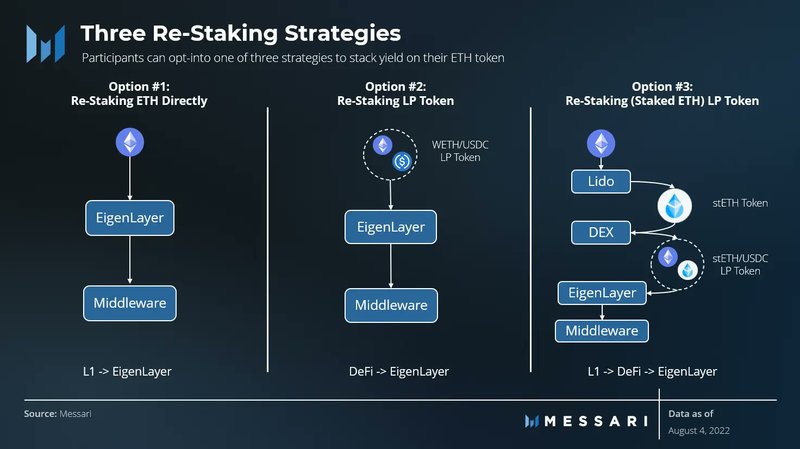
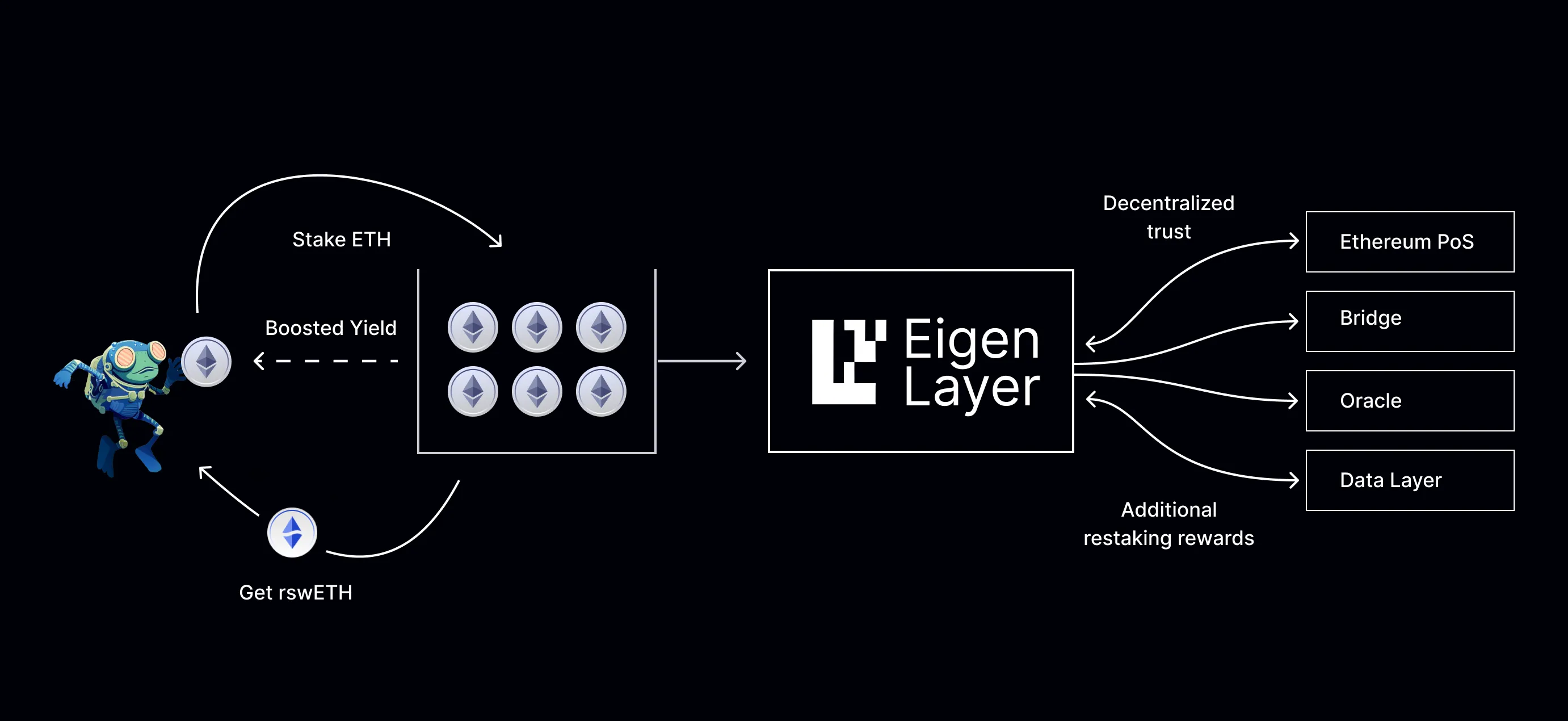
The core mechanic relies on the reuse of staked ETH or liquid staking tokens (LSTs) like stETH. Instead of locking capital in a single validator, stakers delegate their security to AVSs, which can include oracle networks, bridge validators, or decentralized compute providers. This reuse of security infrastructure enables a multi-layer yield structure, combining base staking rewards with additional payments from the AVSs for the security provided.
However, this increased yield potential comes with amplified risk. The "shared security" model means that a slashing event on an AVS can penalize the staker’s entire delegated balance, not just the portion allocated to that specific service. This interconnectedness requires rigorous due diligence and risk management, as the failure of one AVS can impact the broader restaking ecosystem. Understanding the specific smart contract risks and slashing conditions of each AVS is essential for participants seeking to optimize their returns without exposing their principal to unnecessary danger.
The market context for this activity is anchored by the performance of the underlying asset, Ethereum. The following chart illustrates the recent price action of ETH/USD, which directly influences the baseline yield calculations and the economic incentives for restakers.
EigenLayer V2 and modular security shifts
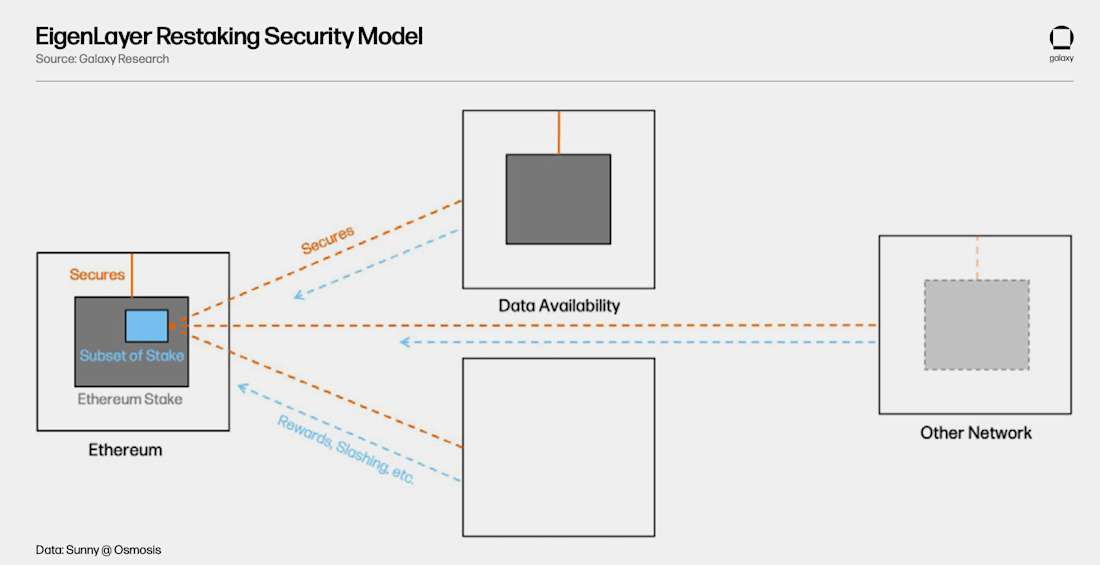
EigenLayer V2 represents a structural pivot from shared security toward a modular framework. By decoupling the validation layer from the consensus layer, the protocol allows ETH stakers to allocate their security credits across distinct services rather than bundling them into a single monolithic pool. This shift enables more granular risk management, though it introduces new complexities in how slashing conditions are enforced across heterogeneous networks.
The core mechanic relies on "restaking," where assets already securing the Ethereum mainnet are reused to protect auxiliary protocols. These services range from oracles and bridges to new rollup architectures. Instead of minting new tokens to bootstrap security, these protocols borrow trust from Ethereum's existing stake. This creates a composable security market where the cost of launching a new chain or service is significantly lower, provided it can attract enough restaked ETH.
However, this modularity increases systemic interdependence. If a major service secured by restaked ETH suffers a critical failure or exploit, the slashing mechanisms must trigger across the entire ecosystem. Stakers face the risk that a single point of failure in a specialized service could result in the loss of their primary Ethereum staking rewards. Due diligence now requires analyzing not just Ethereum's base layer, but the specific technical robustness of every service a restaker chooses to support.
Leading Restaking Protocols Compared
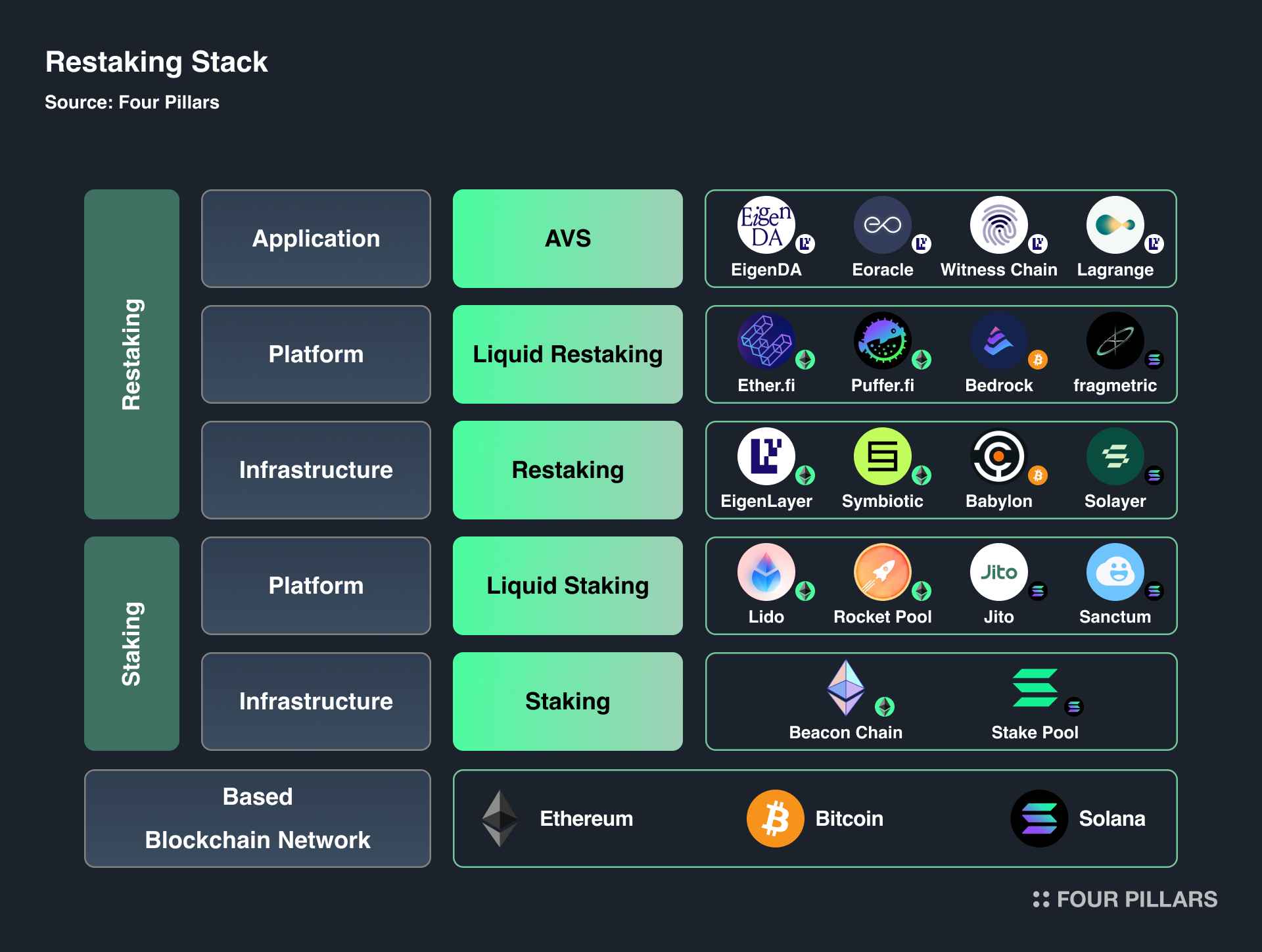
The restaking landscape in 2026 has matured from experimental early adopter phases into a structured market dominated by four primary players: EigenLayer, EtherFi, Symbiotic, and Kelp DAO. Each protocol offers a distinct approach to securing Actively Validated Networks (AVNs) while distributing yield to stakers. Understanding their specific mechanics, TVL dominance, and risk profiles is essential for capital allocation.
EigenLayer remains the foundational layer for native restaking, allowing ETH stakers to directly slash and restake their positions. EtherFi leads the Liquid Restaking Token (LRT) sector, offering automated yield optimization and insurance pools. Symbiotic focuses on composability, enabling custom security sharing between any two smart contracts. Kelp DAO provides a more conservative, risk-managed approach through its RPL-staked ETH product, focusing on institutional-grade security.
The following table compares these protocols based on Total Value Locked (TVL), supported infrastructure, and core risk features.
| Protocol | Est. TVL | Type | Risk Feature |
|---|---|---|---|
| EigenLayer | ~$13B | Native Restaking | Direct Slashing |
| EtherFi | ~$2.1B | Liquid Restaking (LRT) | Insurance Pool |
| Symbiotic | ~$450M | Composable Security | Custom Pools |
| Kelp DAO | ~$1.8B | LRT / RWA | Conservative Staking |
TVL figures are dynamic and reflect the aggregate value secured by each protocol as of early 2026. EigenLayer’s dominance is largely due to its first-mover advantage and direct integration with major liquid staking providers. EtherFi’s LRT model allows users to retain liquidity while earning restaking yields, though it introduces smart contract risk from the LRT wrapper. Symbiotic’s composability allows for flexible security sharing but requires users to carefully audit the specific AVNs they are supporting. Kelp DAO’s focus on risk management appeals to those seeking lower volatility, though it may offer lower yield potential compared to more aggressive strategies.
When selecting a protocol, consider your risk tolerance. Native restaking via EigenLayer offers the highest yield potential but also the highest exposure to slashing events. LRTs like EtherFi and Kelp DAO provide insurance or risk mitigation layers, potentially reducing downside risk at the cost of some yield. Always review the specific AVNs each protocol supports, as the security of your restaked ETH is only as strong as the weakest link in the secured networks.
Managing Slashing and Cascade Risks
Restaking amplifies yield by allowing a single asset, like staked ETH, to secure multiple protocols simultaneously. This efficiency creates a complex web of dependencies where the security of one network often relies on the behavior of another. When you delegate your stake to an Operator, you are not just earning yield; you are assuming the technical and financial risk of their operations. If an Operator misbehaves or suffers a technical failure, the penalties extend beyond the immediate protocol.
Slashing is the primary mechanism for enforcing honesty in these shared security models. It involves the partial or total confiscation of staked assets when an Operator violates consensus rules. In a restaking environment, a single malicious act can trigger slashing across every protocol the operator secures. This is not a localized penalty but a systemic one. The more protocols you restake across, the larger your "attack surface" becomes, increasing the probability of encountering a risky operator or a vulnerable protocol.
Warning: Higher yield in restaking protocols directly correlates with higher slashing risk. Diversifying across too many protocols can expose your entire stake to a single operator's failure.
Cascade failures represent the most severe downside of this architecture. If a major Operator is slashed for failing to perform duties, the resulting loss of stake reduces the security budget for all connected protocols. This can lead to a death spiral where reduced security makes protocols more vulnerable to attacks, further eroding confidence and yield. Understanding these mechanics is essential for anyone seeking to maximize returns without exposing their portfolio to catastrophic, interconnected losses.
Build a safe restaking workflow
Restaking amplifies yield but compounds risk. Entering the space requires treating smart contract interactions with the same caution as a high-stakes financial transaction. The following steps outline a due diligence workflow to protect capital against slashing, smart contract failures, and liquidity traps.
Before depositing assets, review the latest audit reports from reputable security firms. Prioritize protocols that have undergone formal verification and have active bug bounty programs. Check if the protocol uses real-time monitoring tools to detect anomalies. Do not rely on a single audit; look for continuous security oversight and incident response plans.
Slashing is the primary risk in restaking. Read the specific conditions under which your assets can be slashed for malicious operator behavior. Understand the penalty magnitude and whether it applies to your entire restaked amount or just a portion. Ensure you comprehend the appeal process and the timeframes involved in recovering funds after a slashing event.
Avoid delegating to a single operator or a concentrated pool. Spread your restaked assets across multiple operators with different track records and infrastructure setups. This diversification reduces the impact of a single operator’s failure or malicious action. Review operator performance metrics, uptime, and historical slashing incidents before delegating.

Restaked assets are often locked or have delayed withdrawal periods. Ensure you understand the lockup duration and any penalties for early exit. Maintain sufficient liquid assets outside of restaking positions to cover emergencies. Do not restake more capital than you can afford to have tied up for extended periods, especially during market volatility.
EigenLayer V2 and related modular security protocols evolve rapidly. Stay informed about governance proposals, protocol upgrades, and changes to restaking parameters. Participate in governance if possible to influence decisions that affect your exposure. Set up alerts for critical protocol events to react quickly to changes that might impact your position.
Common questions about restaking
Restaking introduces new variables into your portfolio, particularly regarding slashing conditions and cross-chain security. Understanding the mechanics of EigenLayer V2 and modular security is essential for managing these specific risks.
No comments yet. Be the first to share your thoughts!