
What restaking actually unlocks
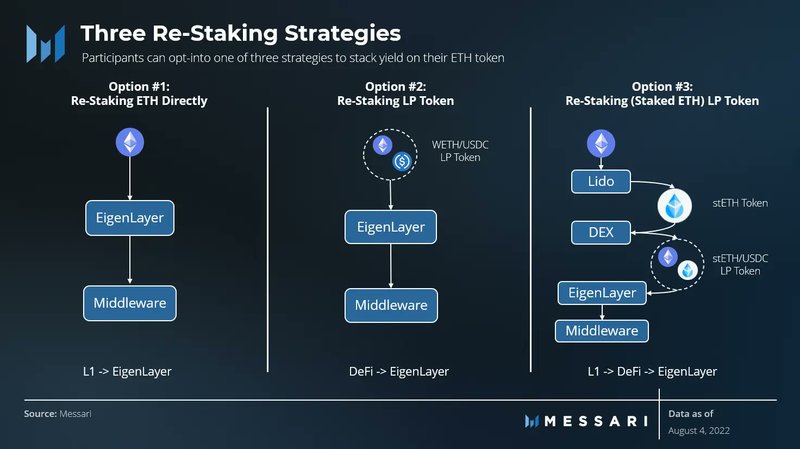
Restaking is the mechanical reuse of staked ETH to secure new services, turning a single layer of security into a multi-purpose utility. Unlike simple staking, where ETH sits idle to validate the Ethereum base layer, restaking allows that same capital to simultaneously back additional networks and protocols. This mechanism effectively unlocks "trapped" capital, transforming static staked assets into active yield engines that serve the broader decentralized infrastructure.
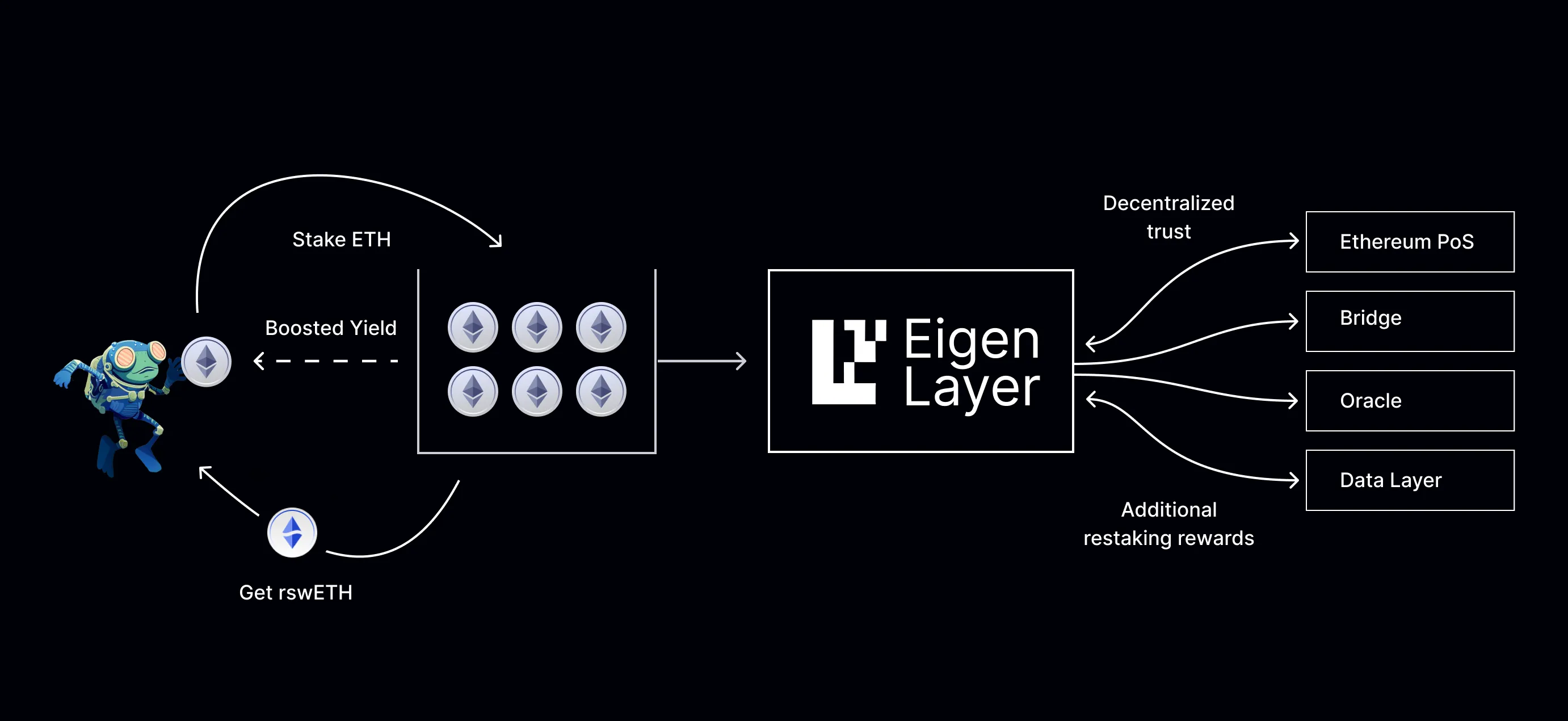
At the center of this shift is EigenLayer, which introduced the concept of Actively Validated Services (AVS). An AVS is any new service—such as an oracle, bridge, or data availability layer—that requires cryptographic proof of validity. By restaking, validators can delegate their existing Ethereum security to these AVSs without deploying new capital or hardware. This creates a shared security model where the robustness of Ethereum underpins emerging technologies, reducing the friction for new projects to launch with institutional-grade trust.
The economic implication is straightforward: you earn yield from the base staking reward and additional fees from the AVSs you support. However, this efficiency comes with concentrated risk. If an AVS fails or is slashed, the restaker’s entire bonded ETH is at stake, not just a portion allocated to a specific service. This interdependence means that restaking is not merely a yield strategy but a structural bet on the reliability of the entire ecosystem it secures.
How EigenLayer AVS Mechanics Work
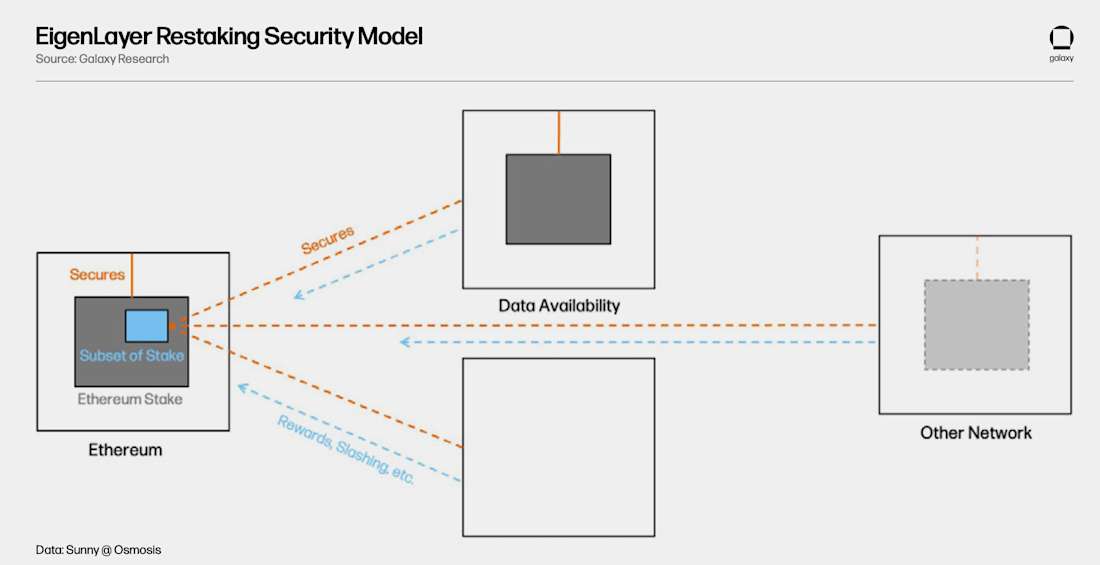
Actively Validated Services (AVS) are the operational engines of EigenLayer’s shared security model. They are not standalone protocols but rather specialized tasks that delegate Ethereum’s consensus power to new networks. When you restake ETH, you are not merely locking assets; you are committing your validator’s signing keys to these specific services. This creates a unified security layer where Ethereum’s economic finality protects multiple layers of the ecosystem simultaneously.
Think of an AVS as a specialized contractor hired by a new blockchain or oracle network. The contractor (the AVS) needs security to prevent fraud or double-spending. Instead of building its own validator set, it rents the security of Ethereum’s staked ETH. Your validator node, which was already securing Ethereum, now signs off on the AVS’s state transitions. This dual responsibility means your stake is on the line for both networks. If you act maliciously or fail to perform your duties in the AVS, your entire restaked balance is slashed. This is the core mechanism: extending Ethereum’s security budget without requiring new capital, but at the cost of increased operational risk for the validator.
The technical execution relies on a network of "restake operators" who run the necessary software to participate in the AVS. These operators must meet specific performance and uptime requirements. The AVS contract on Ethereum verifies the signatures provided by these operators. If the majority of operators behave correctly, the AVS functions securely. If a significant portion acts maliciously, the slashing conditions trigger, penalizing the offending validators. This creates a direct economic incentive for honest behavior across the entire restaked ecosystem.
This model fundamentally changes the security landscape. Previously, each new blockchain had to bootstrap its own security, often leading to fragile networks vulnerable to 51% attacks. With AVS, new protocols inherit Ethereum’s robust security from day one. However, this comes with a critical caveat: the complexity of managing multiple slashing conditions. Validators must monitor their performance across all AVS they participate in. A failure in one AVS can trigger a penalty that impacts their standing in others. This interconnectedness requires rigorous monitoring and risk management, making restaking a high-stakes endeavor for institutional and sophisticated retail validators alike.
Comparing top restaking protocols
The restaking landscape in 2026 has consolidated around a few dominant platforms, each offering distinct trade-offs between yield efficiency, security model, and interoperability. While EigenLayer remains the foundational primitive, protocols like EtherFi, Symbiotic, and Kelp DAO have built specialized layers on top of it. Selecting the right platform requires understanding how each handles validator operations, slashing risk, and cross-chain liquidity.
The following table compares the core metrics and feature sets of the leading restaking protocols, focusing on total value locked (TVL) and structural differences.
| Protocol | TVL (Approx.) | Primary Focus | Risk Model |
|---|---|---|---|
| EigenLayer | $12.5B | AVS Infrastructure | Shared Security |
| EtherFi | $4.8B | Liquid Restaking | Modular Staking |
| Symbiotic | $1.2B | Customizable Security | Asset-Level Security |
| Kelp DAO | $850M | Institutional Yield | Optimized AVS |
EigenLayer continues to dominate TVL due to its first-mover advantage and the growing ecosystem of Actively Validated Services (AVSs) built on its protocol. Its shared security model allows validators to secure multiple services simultaneously, creating a network effect that other platforms struggle to replicate. However, this concentration of value also concentrates risk, as a failure in a major AVS could impact the broader restaking economy.
EtherFi differentiates itself through its liquid restaking token (LRT) model, which allows users to maintain liquidity while earning restaking yields. Its modular approach decouples staking from restaking, offering flexibility for users who want to participate in DeFi while supporting AVSs. Symbiotic takes a more granular approach, allowing users to specify exactly which assets secure which services, providing a customizable risk profile that appeals to institutional participants.
Kelp DAO focuses on optimizing yield for institutional clients, leveraging EigenLayer's infrastructure while adding layers of risk management and compliance. Its smaller TVL reflects its niche focus, but its growth trajectory suggests increasing demand for regulated restaking products. As the market matures, we expect further consolidation, with platforms that offer superior risk management and yield optimization gaining market share.
Slashing risks and cascade effects
Restaking amplifies yield by locking your Ethereum into multiple Active Verification Services (AVS), but it also concentrates risk. When you stake ETH to secure a single protocol, a validator misbehavior triggers a penalty only for that specific contract. In the EigenLayer ecosystem, that same validator might be simultaneously securing an oracle, a bridge, and a new blockchain network. A single technical failure or malicious act can now trigger simultaneous slashing events across all those contracts.
This correlation creates a cascade effect that traditional staking does not face. If a validator node goes offline or signs invalid blocks, the EigenLayer protocol penalizes the staker based on the combined weight of all secured services. The financial hit is not isolated; it is the sum of penalties across every AVS the validator supports. This means a minor error in one niche protocol can drain your entire restaking position, wiping out gains from all other secured services.
The mechanism behind this is EigenLayer’s shared security model. Your ETH acts as collateral for multiple independent protocols. While this increases capital efficiency, it removes the firewall that usually contains risk. You are no longer just betting on Ethereum’s consensus; you are betting on the operational integrity of every AVS you support. If one of those services suffers a critical bug or a coordinated attack, your restaked ETH is on the line, regardless of whether you directly interacted with that specific service.
Understanding this dynamic is essential for any participant in the 2026 restaking landscape. The yield you earn from AVS contracts is not free money; it is a premium for accepting this systemic risk. Before allocating capital, you must assess the security track record of each AVS. A high-yield service with a weak security history is a liability, not an asset, in a correlated slashing environment. The potential for total position loss outweighs the marginal yield gains from less robust protocols.
Where Yield Comes From
The additional yield in restaking does not appear from thin air; it is the direct compensation for providing security to Active Validation Services (AVS) and the market price of that security. When you restake ETH, you are not merely earning a higher staking rate. You are renting out your validator’s signing power to third-party protocols that require Ethereum’s decentralized trust.
AVS Fees and Demand
AVS operators pay validators in two forms: fixed fees for uptime and variable fees for performance. The demand for this security is driven by the utility of the AVS. Oracles, data availability layers, and bridge validators all compete for the same pool of secured validators. As more AVS launch, the competition for validator slots drives up the premium paid to those who provide the security.
This dynamic creates a feedback loop. Higher yields attract more capital, which expands the total value secured (TVS). A larger TVS makes the network more attractive to AVS developers, who in turn offer higher fees to secure their services. The yield is essentially a market-clearing price for decentralized security.
Liquid Staking Derivatives (LSDs)
Liquid staking derivatives play a critical role in this economy. They allow users to restake assets without locking them up, maintaining liquidity while earning restaking yields. This liquidity is essential for market efficiency, as it allows capital to flow quickly to the highest-yielding opportunities. The spread between staking yields and restaking yields reflects the risk premium of the AVS.
Checklist for safe restaking entry
Before locking capital into EigenLayer or other AVS frameworks, treat your due diligence like a security audit. Restaking multiplies yield but also compounds risk; a single slashing event can drain the entire staked position. You must verify the protocol's historical security record and the specific risk profile of the Active Validation Service (AVS) you are supporting.
This checklist is not exhaustive. Always consult the official EigenLayer documentation and consult with a financial advisor before committing significant capital to high-yield, high-risk strategies.
No comments yet. Be the first to share your thoughts!