
Celestia’s Matcha upgrade is not just another routine network update – it represents a seismic shift in the modular blockchain stack, especially for those watching blobspace restaking and the evolution of rollup ecosystems. At its core, Matcha introduces a leap in block capacity and scalability, while recalibrating the economic incentives that underpin Celestia’s DA layer protocols.

Matcha Upgrade: 128MB Blocks and High-Throughput Propagation
The standout feature of Matcha is the increase in maximum block size from 8MB to 128MB, powered by a new high-throughput block propagation mechanism. For context, this upgrade propels Celestia’s data throughput towards 1 GB/s, opening the door for a new era of high-volume applications and rollups that demand abundant, cheap blockspace.
This technical milestone is not just about numbers – it directly impacts how rollups operate atop Celestia. With 128MB blocks, rollups can post substantially more transaction data per block. This expansion helps reduce congestion during peak periods and lays the groundwork for supporting dozens – if not hundreds – of high-activity rollups simultaneously.
For restakers and DA providers, this means:
- Greater blobspace supply, reducing data availability fees over time
- Improved scalability for cross-rollup applications and onchain trading venues
- Enhanced security guarantees, as more data can be verified via Celestia’s erasure coding and sampling
Inflation Reduction: TIA’s New Economic Dynamics at $1.01
The Matcha upgrade also slashes Celestia’s native token inflation from 5% to just 2.5%. This change is pivotal for restaking economics: lower inflation historically boosts token scarcity and can make TIA more attractive as collateral within DeFi protocols or as a base asset in cross-rollup liquidity pools.
At the time of writing, TIA trades at $1.01. This new inflation regime means both validators and delegators must reassess their yield expectations relative to network growth and participation rates. The move also signals Celestia’s intent to prepare for a future shift toward Proof-of-Governance – a model where governance participation could directly influence rewards, adding another layer of strategic consideration for restakers.
Celestia (TIA) Price Prediction Post-Matcha Upgrade: 2026-2031
Professional Forecast Scenarios for TIA Amid Matcha Upgrade and Modular Blockchain Adoption
| Year | Minimum Price | Average Price | Maximum Price | Year-over-Year Change (Avg) |
|---|---|---|---|---|
| 2026 | $0.85 | $1.25 | $2.10 | +24% |
| 2027 | $1.10 | $1.75 | $3.00 | +40% |
| 2028 | $1.40 | $2.30 | $4.20 | +31% |
| 2029 | $1.60 | $2.80 | $5.60 | +22% |
| 2030 | $1.90 | $3.40 | $7.00 | +21% |
| 2031 | $2.20 | $4.10 | $8.80 | +21% |
Price Prediction Summary
TIA is positioned for steady growth following the Matcha upgrade, which enhances scalability, cuts inflation, and fosters interoperability. The price outlook anticipates increasing adoption of Celestia as a data availability layer for rollups, with average prices expected to rise from $1.25 in 2026 to $4.10 by 2031. Bullish scenarios could see TIA reaching as high as $8.80, while bearish regulatory or adoption setbacks may limit upside to $2.20–$2.80. Year-over-year growth reflects both the potential for modular blockchain expansion and cyclical market corrections.
Key Factors Affecting Celestia Price
- Matcha upgrade’s scalability improvements (128MB blocks, higher throughput) attracting more rollups and DeFi projects.
- Inflation rate reduction (from 5% to 2.5%), improving TIA’s appeal as a long-term store of value and DeFi collateral.
- Enhanced cross-chain interoperability due to IBC and Hyperlane changes, potentially boosting ecosystem activity.
- Potential shift to Proof-of-Governance affecting staking and validator incentives.
- Adoption trends in blobspace restaking and modular blockchain solutions.
- Competition from other data availability and modular networks (e.g., EigenLayer, Avail).
- General crypto market cycles, risk sentiment, and regulatory clarity impacting investor confidence.
- Broader adoption of rollups and Layer 2s driving demand for scalable DA solutions like Celestia.
Disclaimer: Cryptocurrency price predictions are speculative and based on current market analysis.
Actual prices may vary significantly due to market volatility, regulatory changes, and other factors.
Always do your own research before making investment decisions.
Interoperability Unlocked: Routing Layer for Cross-Chain Assets
Another crucial aspect of Matcha is the removal of token filters on Inter-Blockchain Communication (IBC) and Hyperlane bridges. Practically speaking, this enables any asset to be bridged into Celestia’s ecosystem. As a result, Celestia transforms from a pure DA layer into an active routing hub for cross-chain assets.
This interoperability boost brings several benefits:
- Simplified cross-rollup liquidity provisioning, as assets can flow freely between chains anchored by Celestia DA
- New opportunities for restaking strategies, leveraging diverse collateral types from across the modular blockchain universe
- A more interconnected rollup ecosystem, driving composability between apps built on different L2s/L3s but secured by the same DA backbone
The Blobspace Restaking Opportunity in a Post-Matcha World
The ramifications for blobspace restaking are profound. With increased block size comes greater supply of data availability (DA), which could exert downward pressure on fees but simultaneously attract more sophisticated restaking protocols seeking to arbitrage risk across multiple rollups or DA providers.
Blobspace restaking protocols now face a landscape where abundant blockspace is no longer a theoretical goal but an operational reality. This expansion allows for more granular risk segmentation and innovative staking products, as protocols can design mechanisms that take advantage of varying demand across rollups, time periods, or even specific application types. The ability to restake across multiple rollups and DA providers becomes not only feasible but potentially lucrative as the modular stack matures.
For restakers, the key challenge will be to dynamically allocate capital in response to shifting fee structures and utilization rates. As the supply of blobspace increases, competition among rollups for inclusion on Celestia’s DA layer could intensify, leading to new strategies for maximizing yield while maintaining robust security guarantees. Protocols that can efficiently aggregate and route restaked assets, while monitoring real-time network congestion and DA pricing, will be at a significant advantage.
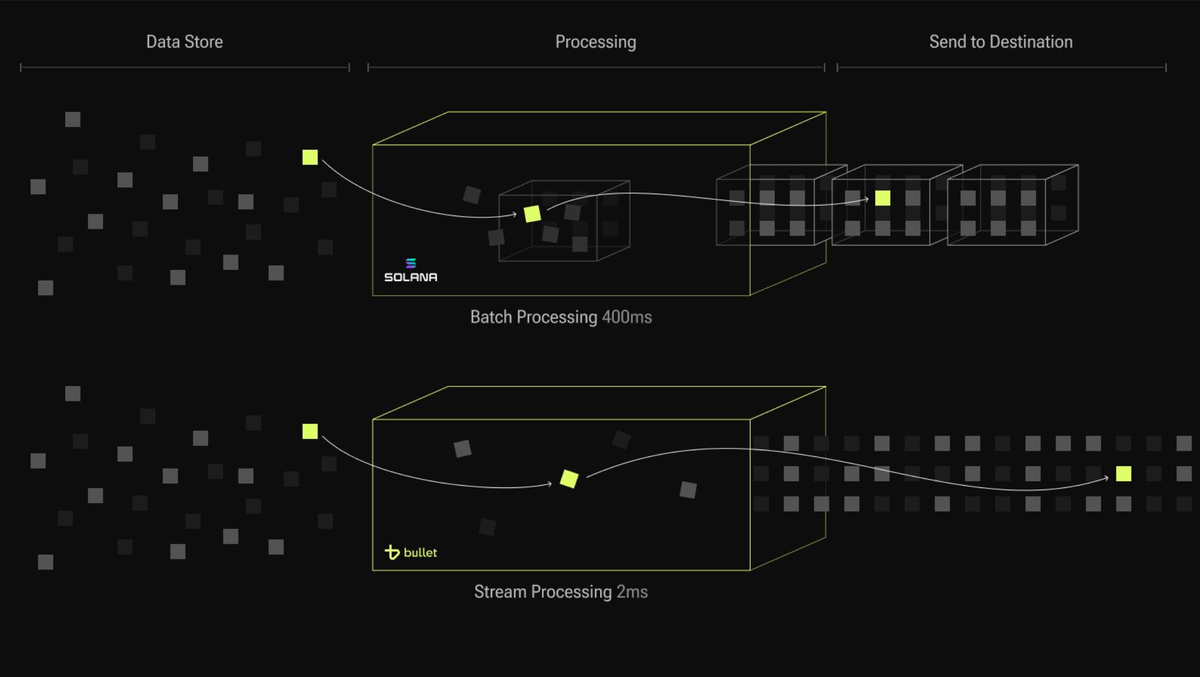
Rollup Ecosystems: Scaling Without Compromise
Matcha’s impact on rollup ecosystems is already reverberating throughout the modular blockchain community. By alleviating data bottlenecks, Celestia enables both established and emerging rollups to scale user activity without facing prohibitive DA costs or risking liveness failures during network surges. This is particularly critical for high-throughput applications such as decentralized exchanges, gaming protocols, or onchain order books, industries where latency and cost sensitivity are paramount.
The upgrade also enhances Celestia’s appeal as the DA layer of choice for new rollup projects. Teams can launch with confidence that their scaling roadmap will not be constrained by underlying infrastructure limitations. Moreover, cross-rollup communication becomes smoother as more chains anchor their data to a common, high-capacity DA substrate, fostering composability across DeFi primitives, NFT platforms, and beyond.
Restaking Strategies in the Modular Era
With TIA inflation now at 2.5% and trading at $1.01, restakers must recalibrate their approach to risk-adjusted returns. The reduced inflation rate may compress nominal yields but is likely to bolster long-term token value if demand for blockspace continues its upward trajectory post-Matcha. Advanced restaking strategies may include:
- Diversification: Allocating stake across multiple rollups with differing utilization profiles
- Dynamic Rebalancing: Adjusting exposure based on real-time blobspace demand and fee markets
- Governance Participation: Engaging in Celestia’s evolving governance processes to influence protocol upgrades or reward mechanisms
The shift toward Proof-of-Governance further incentivizes active engagement from restakers, not just passive capital allocation, potentially rewarding those who contribute meaningfully to network decision-making.
What Comes Next?
The Matcha upgrade cements Celestia’s role at the heart of modular blockchain infrastructure. As more projects deploy atop its scalable DA layer, and as cross-chain asset routing becomes seamless, the opportunity set for blobspace restaking will only broaden.
The coming months will test how quickly markets adapt: Will fees stabilize at lower levels? How aggressively will new rollups launch? And which protocols will emerge as leaders in orchestrating capital flows across this newly abundant blobspace landscape?
Celestia’s technical ambition is now matched by its economic vision, a rare alignment in blockchain history. For developers, investors, and especially sophisticated restakers, the post-Matcha era offers both fresh challenges and unprecedented opportunities.
About the Author