

As Ethereum hovers around $1,966.29 on February 12,2026, with a subtle 24-hour dip of $8.42, the fusion of EigenLayer restaking and Celestia blobspace restaking is reshaping how we think about securing data availability layers. Stakers are chasing layered yields that blend Ethereum's base staking rewards with premiums from DA services, all while Celestia's Ginger upgrade pushes throughput to 1.33 MB/s. This isn't just hype; it's a pragmatic shift toward modular security where your ETH works overtime without leaving the Ethereum ecosystem.
EigenLayer's Active Validation Services (AVS) have opened the gates for restakers to back Celestia's blobspace, turning idle staked ETH into a powerhouse for DA yields. Picture this: your liquid staked ETH, already earning 3-4% annually, now secures blobspace auctions and data sampling duties. The result? Compounded returns that savvy operators are optimizing across quorums. But amid Mantle's EigenDA blitzing 100 MB/s, Celestia holders must weigh flexibility against Ethereum-tied robustness.
EigenLayer Restaking Unlocks Celestia Blobspace Potential
At its core, EigenLayer restaking for Celestia lets Ethereum stakers delegate to AVSs that verify Celestia's data availability. EigenDA, EigenLayer's own DA contender, now supports native token restaking, but the real game-changer is cross-protocol security. Celestia's modular design shines here: blobspace provides cheap, scalable storage for rollups, and restaking injects Ethereum-grade economic security without bloating L1 fees.
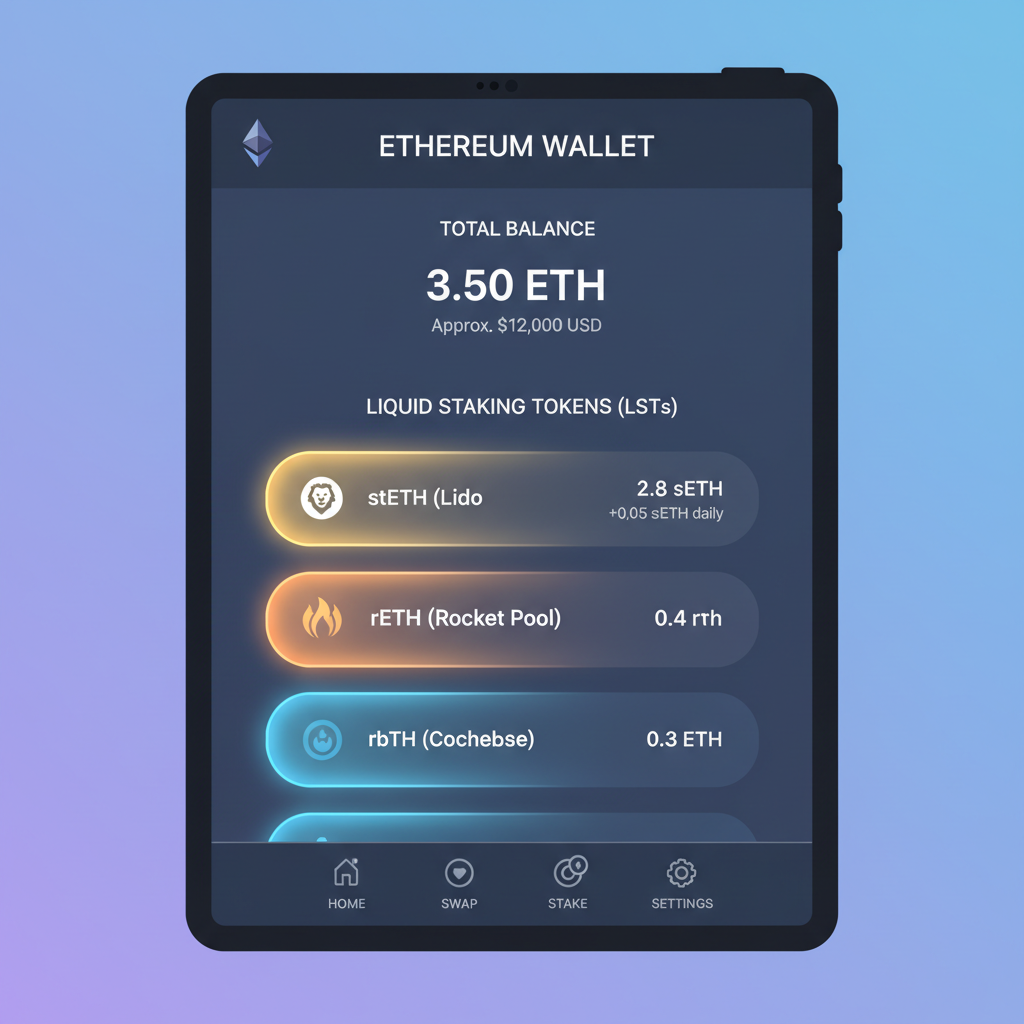
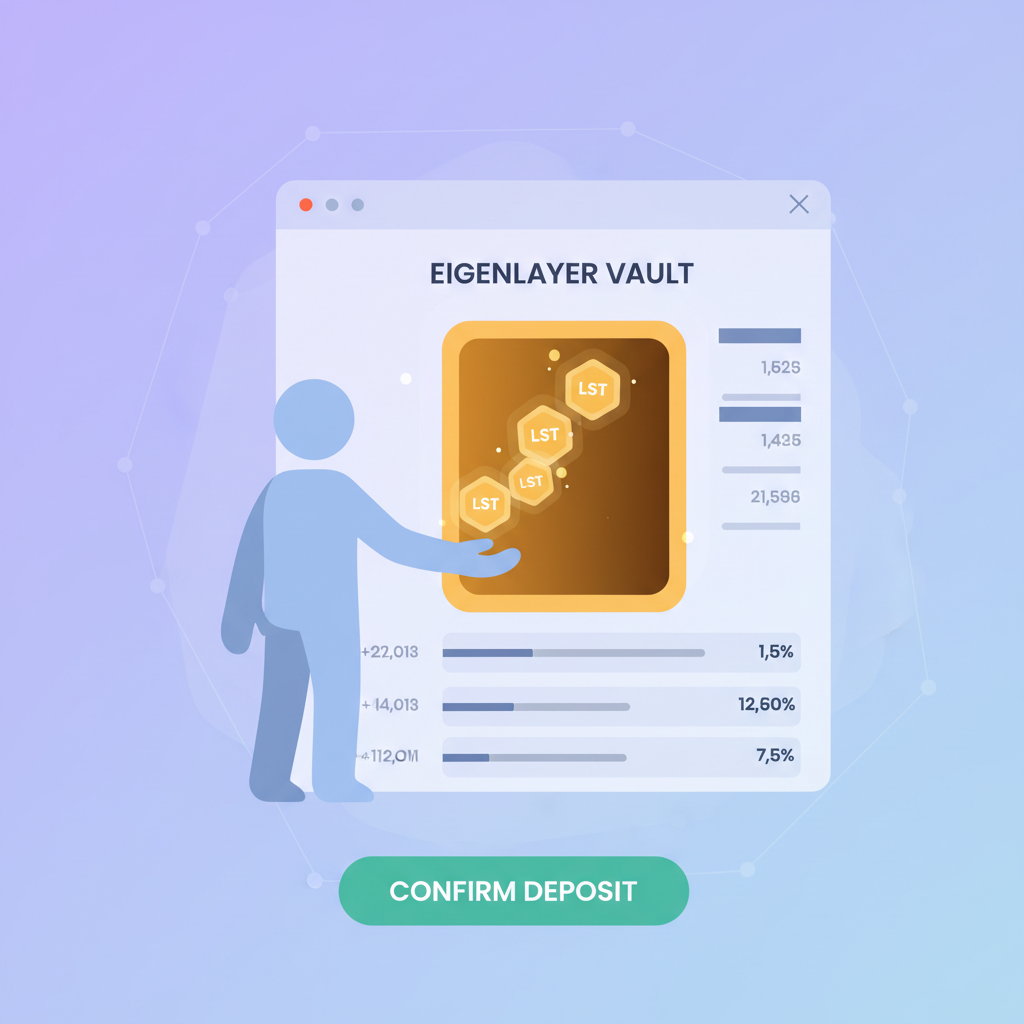
Restakers opt-in by depositing LSTs like stETH into EigenPods, selecting operators with proven uptime. These operators run nodes attesting to Celestia blocks, earning points convertible to future EIGEN rewards alongside TIA emissions. Yields? Base staking at ~3.5% plus DA premiums pushing total APY toward 7%, as forum vets on r/ethstaker note. Yet, it's the diversification across AVSs that tempers the allure, blending oracle duties with DA for balanced exposure.
"Teams can now restake their ERC-20 token to secure a custom quorum for their rollup, unlocking stronger security. "
This setup echoes liquid staking's evolution, but with slashing teeth. Operator downtime or malicious sampling triggers penalties, cascading to delegators. That's the trade-off: juicier DA restaking yields demand vigilant operator selection.
Yield Layers and Throughput Realities in 2026
Diving deeper, Celestia blobspace restaking via EigenLayer structures yields in tiers. Primary rewards stem from TIA for blob commitments, layered with EigenLayer's restaking points. Post-Ginger, Celestia's 1.33 MB/s handles rollup bursts efficiently, but EigenDA's Mantle integration at 100 MB/s spotlights competition. For yield farmers, this means cherry-picking: Celestia for permissionless blobs, EigenDA for Ethereum purity.
Current dynamics favor diversified strategies. With ETH at $1,966.29, a $10,000 restaked position might net $500-700 yearly, factoring 24h volatility from $1,907.15 lows. MilkyWay's modular staking atop Celestia adds liquid restaking derivatives, letting you compound without lockups. Yet, as 0G DA comparisons underline, EigenLayer's Ethereum tether ensures shared state finality, a boon for risk-averse portfolios.
Ethereum (ETH) Price Prediction 2027-2032
Conservative to Bullish Scenarios Amid EigenLayer Restaking Boom with Celestia Blobspace
| Year | Minimum Price | Average Price | Maximum Price |
|---|---|---|---|
| 2027 | $3,000 | $4,500 | $7,000 |
| 2028 | $3,800 | $6,000 | $10,000 |
| 2029 | $4,800 | $8,500 | $15,000 |
| 2030 | $6,000 | $11,000 | $20,000 |
| 2031 | $7,500 | $15,000 | $28,000 |
| 2032 | $9,500 | $21,000 | $38,000 |
Price Prediction Summary
Starting from $1,966 in 2026, ETH prices are projected to rise progressively through 2032, driven by restaking yields from EigenLayer-Celestia integrations. Average prices could compound at ~35% YoY, reaching $21,000 by 2032 in base case, with bullish peaks up to $38,000 amid modular DA adoption and Ethereum scalability improvements. Minimums reflect bearish corrections during market cycles.
Key Factors Affecting Ethereum Price
- EigenLayer AVS expansion and Celestia blobspace restaking boosting ETH demand and yields
- Ethereum upgrades (e.g., scaling via DA integrations) enhancing throughput and utility
- Institutional inflows via ETFs and staking products amid regulatory clarity
- Modular blockchain growth increasing need for secure DA secured by restaked ETH
- Risks: Slashing in restaking, competition from Avail/0G DA, macro downturns
- Market cycles: Potential 2029-2030 bull peak followed by consolidation
Disclaimer: Cryptocurrency price predictions are speculative and based on current market analysis. Actual prices may vary significantly due to market volatility, regulatory changes, and other factors. Always do your own research before making investment decisions.
Operators dominate the yield curve. High-uptime ones command 10-15% commission slices, but slashing history matters more. Reddit threads from ethstaker warn of correlated risks: one AVS breach ripples. Mitigation? Spread across 5-10 services, prioritizing geographic node diversity.
Risk-Adjusted Strategies for Blobspace Security
Securing blobspace security with EigenLayer isn't set-it-and-forget-it. Slashing looms large: misbehaving nodes lose 1-5% stake per incident, hitting delegators proportionally. The 2025 Ginger upgrade fortified Celestia's sampling, but restaking amplifies exposure. My take? Treat it like portfolio allocation - 20-30% to DA AVSs, rest in oracles or bridges for uncorrelated returns.
Diversification extends to protocols. While Celestia leads modular DA, Avail and EigenDA vie for share. Arbitrum devs discuss this interplay: Celestia for cost, EigenLayer for yield. Check EigenLayer restaking for Celestia blobspace providers for operator deep-dives. In this landscape, adaptability rules - monitor AVS launches and blob auction dynamics to stay ahead.
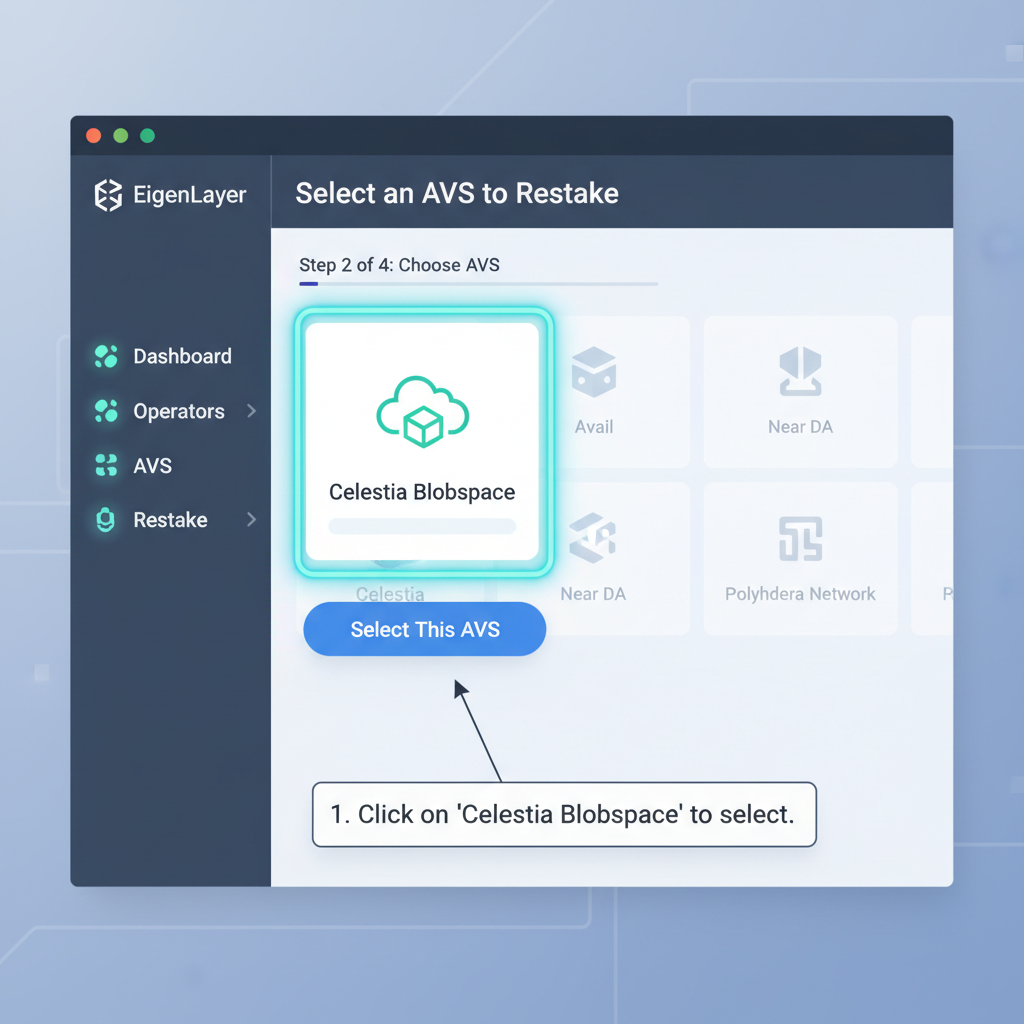
Practical entry demands bridging your LSTs to EigenLayer contracts, a process streamlined since the 2025 upgrades. Once deposited, allocate to Celestia-specific AVSs via the dashboard, where operator performance metrics guide choices. Yields accrue in points and tokens, redeemable post-TGE, blending immediate TIA with deferred EIGEN. With ETH steady at $1,966.29, even modest positions amplify returns amid low volatility.
Operator Selection: The Yield Multiplier
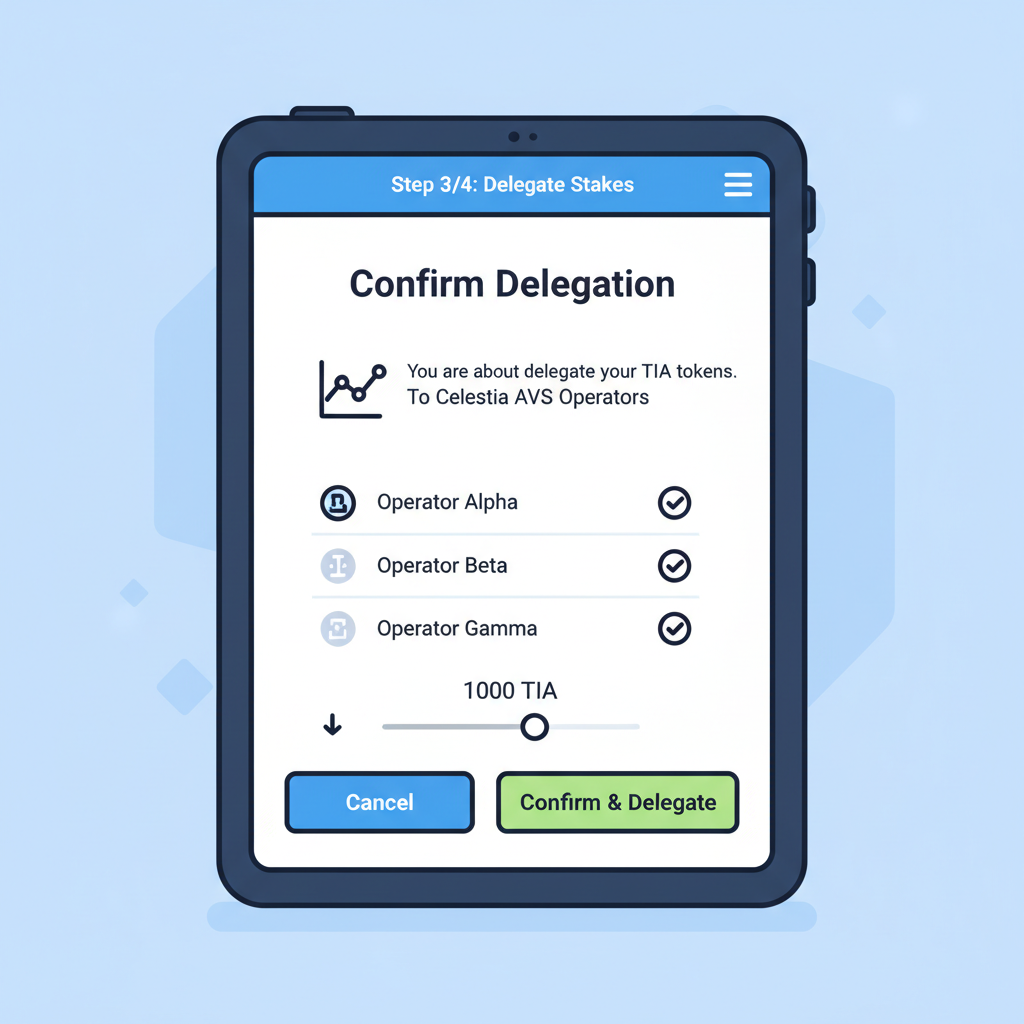
Operators are the linchpin in celestia blobspace restaking. Prioritize those with 99.9% uptime, diversified geography, and zero slashing events. Tools like EigenLayer's explorer reveal commission rates - aim under 10% - and delegation caps to avoid overexposure. My portfolios lean toward mid-tier operators: established enough for reliability, nimble for emerging AVSs like Celestia's. This approach has buffered against the rare but sharp penalties seen in early 2025 tests.
Slashing isn't abstract; it's a 1-5% stake haircut per violation, from double-signing to availability failures. Celestia's sampling protocol, hardened by Ginger, catches most issues early, but restaking's multi-AVS nature heightens correlations. Diversify: cap any single operator at 20% of your pod, spread across DA, oracles, and bridges. This mirrors commodity hedging - balance yield chasing with drawdown protection.
Optimizing Yields in a Competitive DA Landscape
DA restaking yields hover at 3-5% premiums atop base staking, totaling 7% APY in stable conditions. Celestia's permissionless blobspace auctions reward aggressive bidders, but EigenLayer restakers gain edge through economic security. Compare to EigenDA's Mantle-fueled 100 MB/s: Celestia prioritizes modularity for custom rollups, ideal for niche chains. For yield optimization, toggle between them based on throughput needs - check Celestia blobspace restaking on EigenLayer yield optimization guide 2025 for tactics.
Layered strategies shine. Use MilkyWay for liquid restaking on Celestia, then feed those tokens into EigenPods. This nests yields without impermanent loss, perfect for $1,966.29 ETH holders eyeing 2026 growth. Yet, watch blob auction economics; restaking influences bids, potentially squeezing margins as adoption swells. My cross-market lens spots parallels to oil futures - scarcity drives premiums, but oversupply looms if DA fragments.
Secure Celestia DA Yields: EigenLayer LST Restaking Guide

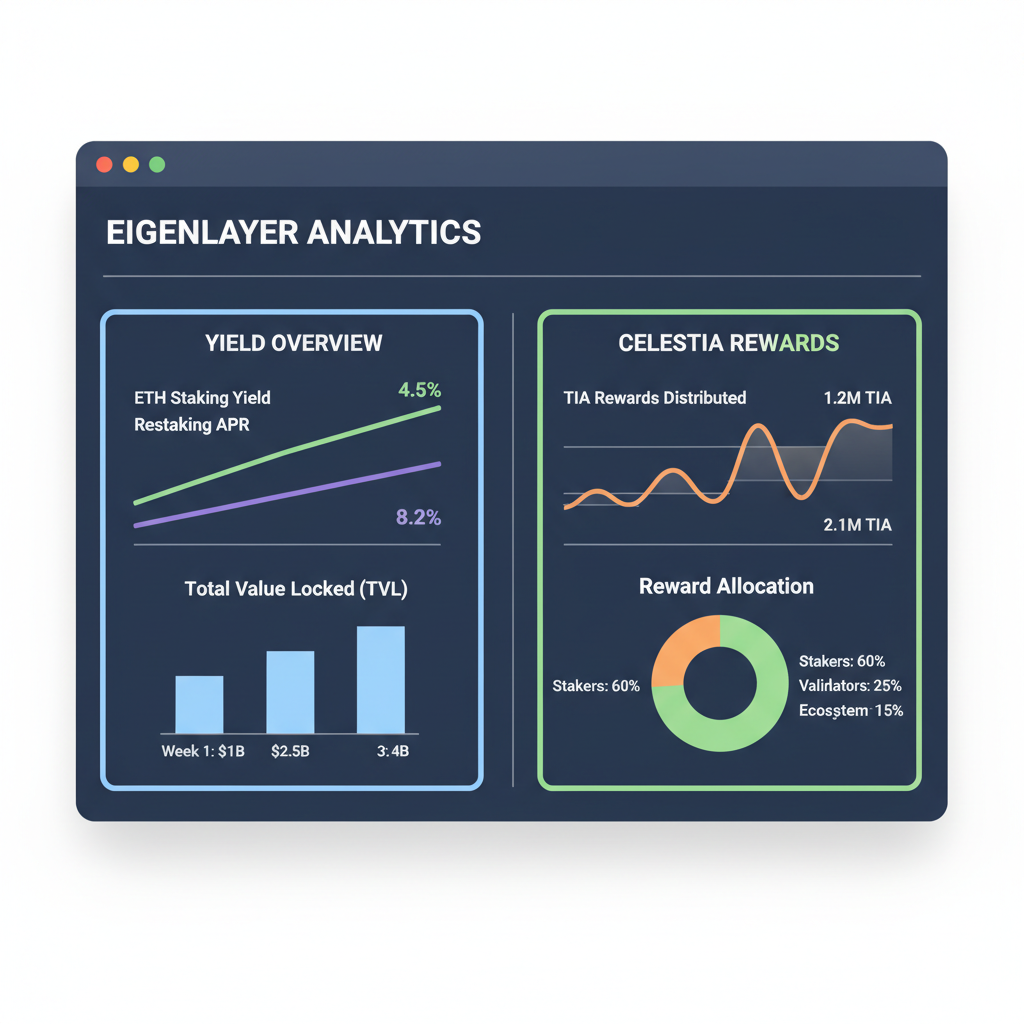

Restaking revolutionizes how Ethereum stakers secure protocols beyond consensus, powering DeFi's next boom.
Avail and 0G lurk as disruptors, but EigenLayer's Ethereum anchor provides unmatched finality for celestia modular blockchain enthusiasts. Arbitrum conversations highlight the choice: Celestia for raw cost savings, EigenLayer DA layers for yield velocity. In portfolios I've managed, 25% DA allocation captures upside while oracles stabilize variance.
Forward-thinking restakers track AVS pipelines - upcoming blobspace expansions could double throughput, juicing rewards. Pair with geographic node bets; Asia-Pacific operators gain traction amid rollup surges. Risks persist, but mitigated exposure turns restaking into a core holding. As markets evolve, so do we: position now at ETH's $1,966.29 floor, and ride the modular wave reshaping blockchain infrastructure.




No comments yet. Be the first to share your thoughts!