

In 2025, the modular blockchain ecosystem stands at a critical inflection point. The rise of blobspace restaking has fundamentally transformed how data availability (DA) is secured and monetized across leading platforms like Celestia, EigenLayer, and Avail. For developers and investors, understanding these innovations is no longer optional - it’s essential for maximizing yield, ensuring robust security, and unlocking new scalability frontiers.
Blobspace Restaking: The Engine Behind Modular Blockchain Security
The modular blockchain thesis argues that separating consensus, execution, and data availability unlocks unprecedented flexibility and efficiency. However, this very separation introduces new challenges: How do you secure DA layers without fragmenting validator incentives? How can emerging rollups access shared security without bootstrapping their own networks?
Blobspace restaking addresses these concerns by allowing validators to "restake" assets such as Ethereum (ETH) - currently trading at $2,985.79 - across multiple protocols simultaneously. Instead of siloed validator sets for every DA service or rollup, restaking enables a shared security model. This reduces capital inefficiency while dramatically lowering the barrier for new Actively Validated Services (AVSs) to launch securely.
For example, EigenDA leverages the EigenLayer restaking framework to let ETH stakers secure its decentralized DA service. Projects like Mantle Network and ZKsync now use EigenDA to enhance their infrastructure without spinning up independent validator networks. The result? Lower verification costs for end users and more resilient data availability guarantees for all participants.
Blobspace Economics: Cost Compression and Capital Efficiency
The economic impact of blobspace restaking is profound. Celestia’s DA layer has been cited as reducing rollup costs by up to 3000x, thanks to innovations in both protocol design and blobspace compression techniques (see our deep dive here). By compressing transaction data before publishing it as blobs on the DA layer, rollup operators minimize both storage requirements and bandwidth usage.
This approach is not purely theoretical - frameworks like AltLayer have adopted these strategies in production environments. The net effect is a virtuous cycle: lower fees attract more applications to modular blockchains; increased activity drives greater demand for blobspace; higher demand incentivizes validators to participate in restaking markets.
- Shared Security: Validators earn additional yield by securing multiple protocols with the same stake.
- User Cost Savings: End users benefit from reduced transaction fees as data compression lowers operational expenses.
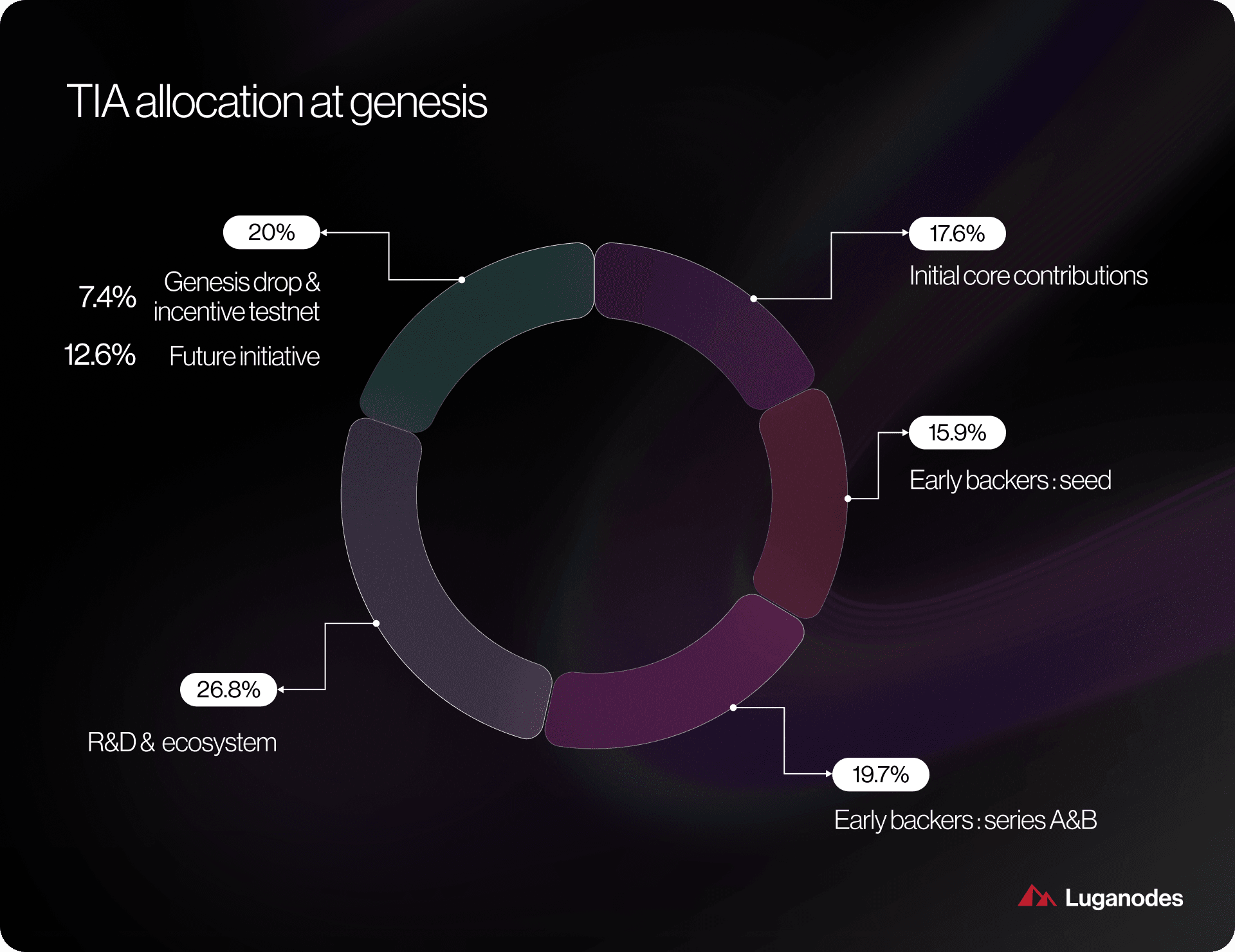
- Sustainable Incentives: Blobspace payments (e. g. , via TIA on Celestia or AVAIL tokens on Avail) align economic interests between validators, developers, and token holders.
The Expanding Data Availability Wars: Comparing Leading Modular Solutions
The race for dominance among DA layers has intensified in 2025. While Celestia remains the reference model - with its native TIA token used for blobspace payments and staking - competitors like EigenDA (restaked ETH), Avail (AVAIL token), and others are rapidly innovating on features such as throughput scaling, cryptographic guarantees, and cross-chain interoperability.
This competition benefits the entire ecosystem by pushing down costs while raising security standards. For instance, EigenDA’s integration into DeFi protocols allows liquid stakers to unlock layered yields while securing both Ethereum’s base layer and emerging DA services simultaneously. Meanwhile, Avail’s focus on unifying Web3 through accessible blobspace payments expands participation beyond specialist developers to mainstream dApp teams seeking scalable infrastructure.
If you want a deeper look at maximizing yield through blobspace innovations in modular ecosystems, check out our comprehensive guide here.
As modular blockchain architectures mature, the interplay between blobspace restaking and DA layers is catalyzing a new era of composability and scalability. The real-world impact is visible: more rollups are launching with minimal friction, capital efficiency is at an all-time high, and security assumptions are increasingly robust due to shared validator sets. The modular stack is no longer a theoretical construct but a living, evolving ecosystem where economic alignment drives technical innovation.
Top Modular DA Layers & Their Restaking Models (2025)
- Celestia: The leading modular data availability (DA) layer, Celestia leverages its native token TIA for both blobspace payments and staking. In 2025, Celestia's innovative blobspace economics and compression techniques have reduced rollup costs by up to 3000x. Validators stake TIA to secure the network, ensuring scalable and verifiable data availability for rollups and modular chains.
- EigenDA (by EigenLayer): Built atop Ethereum, EigenDA utilizes the EigenLayer Restaking framework to provide decentralized DA services. Validators restake Ethereum (ETH)—currently priced at $2,985.79—to secure EigenDA, offering shared security to multiple protocols. This model is adopted by projects like Mantle Network and ZKsync, enabling high-throughput, cost-efficient data availability for rollups.
- Avail: Avail is a modular DA network that unifies Web3 by enabling users to pay for blobspace, cover DA fees, and participate in staking with its native AVAIL token. In 2025, Avail's staking mechanism supports robust data availability for rollups and modular blockchains, while its protocol innovations focus on scalability and user participation.
Yet, challenges remain. As the number of Actively Validated Services (AVSs) leveraging restaked assets grows, so does the complexity of slashing conditions and incentive design. Ensuring that validators behave honestly across multiple protocols, each with its own risk profile, requires ongoing research into cryptoeconomic security. Liquid staking derivatives add another layer of complexity, as they introduce secondary markets for staked assets that must be managed carefully to prevent systemic risks.
Blobspace compression continues to be a focal point for cost optimization. By refining zero-knowledge proof aggregation and data encoding schemes, projects like AltLayer are demonstrating that it’s possible to maintain high throughput without sacrificing decentralization or verifiability. These advances are particularly relevant as AI/ML workloads begin to leverage modular blockchains for scalable data storage and compute access, a trend already evident in 2025’s emerging protocol landscape.
Looking Forward: What’s Next for Blobspace Restaking?
The next wave of innovation will likely center on interoperability between DA layers and the seamless movement of restaked collateral across chains. Expect to see more sophisticated cross-chain messaging standards and liquid staking protocols that abstract away underlying complexity for both users and developers. As these systems evolve, data availability restaking will become an invisible backbone, powering not just DeFi or gaming applications but enterprise-grade AI models and global settlement rails.
The implications for investors are clear: understanding blobspace economics is now a prerequisite for identifying sustainable yield opportunities in the modular blockchain sector. For developers, DA layer selection, and by extension, restaking strategy, will increasingly define user experience through fee structures, finality guarantees, and integration options.
This rapidly shifting landscape requires vigilance but also offers unprecedented upside for those who can navigate it thoughtfully. If you’re looking to deepen your knowledge or optimize your own DA strategies, our guides on blobspace restaking offer actionable insights tailored for both technical builders and strategic investors.




No comments yet. Be the first to share your thoughts!